

Operations teams handling compliance deadlines, legal notices, and time-sensitive business communications face a persistent operational burden: the manual process of printing, folding, stuffing envelopes, metering postage, and tracking delivery proof consumes hours of staff time while creating significant risk. Missing a mailing deadline or losing tracking documentation can trigger regulatory penalties, weaken legal standing, or damage client relationships. An automated print and mail API eliminates these bottlenecks by enabling software systems to send physical mail programmatically—transforming what was once a labor-intensive mailroom function into a streamlined, trackable workflow with direct mail functionality that allows users to manage and analyze mail campaigns within their existing software workflows.
This article covers business-critical mail automation rather than marketing direct mail campaigns. The target audience includes operations managers, compliance teams, HOA and community managers, legal administrators, healthcare admin teams, finance and billing departments, and nonprofit administrators who need reliable, trackable mail delivery for notices, statements, and regulatory correspondence. Marketing automation tools and direct mail marketing platforms serve different purposes; the focus here is on automating essential business communications with proof, tracking, and compliance documentation.
What does an automated print and mail API do? It allows organizations to send document payloads and address data to a vendor partner via a REST API or application programming interface. The platform enables seamless integration with business systems for automated mail delivery. The vendor handles printing, addressing, postage, and mailing through postal services—including certified mail with return receipts—while providing real-time tracking, proof of mailing, and audit trails accessible through a dashboard or webhooks.
Key outcomes organizations gain from implementing automated print and mail APIs:
- Time savings: Eliminate hours of manual labor per week on print, stuff, and ship tasks
- Compliance tracking: Obtain certified mail receipts, proof of delivery, and chain-of-custody documentation
- Reduced manual errors: Address verification prevents returned mail; automated formatting eliminates template mistakes and the ability to verify addresses further reduces delivery issues
- Scalable workflows: Handle volume spikes without proportional staff increases
- Audit trails: Store tracking data and delivery confirmation for regulatory requirements
- Cost savings: Reduce overhead by automating mailroom operations; some vendors offer free setup or no initial costs, lowering the barrier to entry
When using an automated print and mail API, a send API is used to trigger the sending of physical mail programmatically. The API automates mailroom functions by generating mailpieces automatically, ensuring efficiency and accuracy throughout the process.

Understanding Automated Print and Mail APIs
An automated print and mail API is an interface that allows business systems to send documents for physical mailing without manual intervention. Rather than maintaining in-house printing equipment, postage meters, and mailroom staff, organizations use an API to transmit document templates, variable data, and recipient addresses to a print and mail vendor. The API can be integrated directly into an organization’s existing technology stack, enabling seamless workflow automation alongside other software tools. The vendor produces the mail piece, applies postage, and hands it to the postal service—often within a defined service level agreement of one to two business days.
This approach replaces manual mailroom processes with software-driven automation. For operations teams managing high volumes of notices, statements, or legal correspondence, the efficiency gains are substantial. Staff time previously spent on printing and mailing can redirect to higher-value work, while tracking and compliance documentation become automatic rather than manual record-keeping tasks.
Core API Functionality
Document preparation and formatting automation forms the foundation of print and mail APIs. Most platforms support variable data printing, where common documents—violation notices, invoices, legal letters, patient statements—use templates with placeholders for recipient names, dates, amounts, and custom content. Some APIs support conditional content that includes or excludes sections based on specific criteria, enabling a single mailpiece template to serve multiple use cases.
Integration capabilities connect automated print and mail services with existing business systems. APIs typically offer REST API endpoints that integrate with CRM platforms, ERP systems, case management software, and accounting tools. Webhooks provide real-time status updates when mail pieces are printed, shipped, or delivered. Address verification services clean and validate recipient addresses before mailing, reducing returned mail rates. Comprehensive documentation and sandbox environments allow developers to test integrations before production deployment.
These capabilities matter for daily operations because they eliminate data re-entry, reduce errors from manual processes, and create seamless integration between business workflows and physical mail delivery. When a case management system generates a legal notice, the API can automatically send it for certified mail delivery without staff intervention.
Delivery and Tracking Components
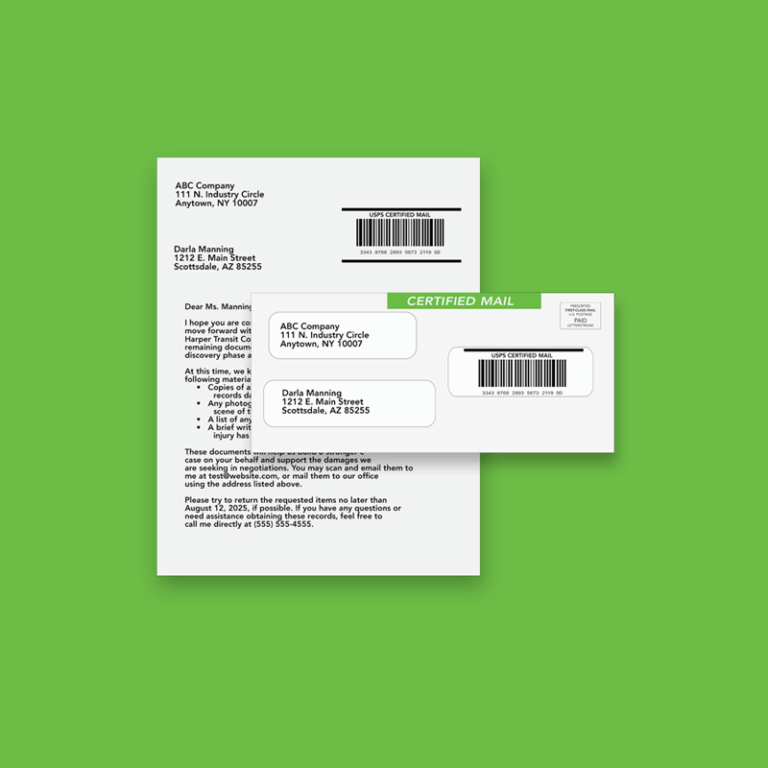
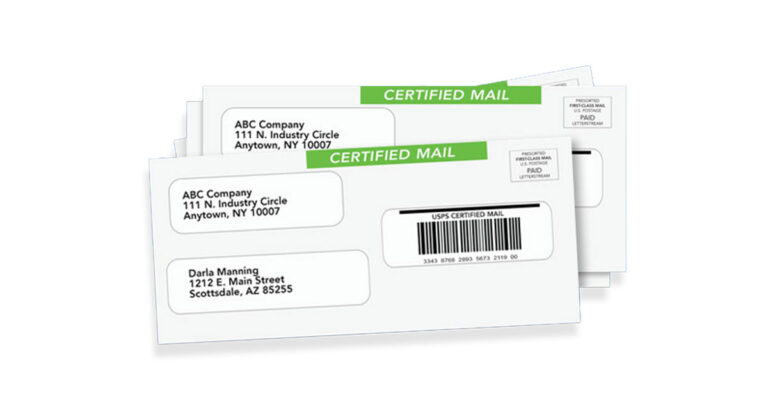
Certified mail automation and proof of delivery address one of the most critical requirements for compliance-focused organizations. APIs supporting certified mail allow software systems to request USPS Certified Mail with return receipts, obtain tracking numbers programmatically, and receive electronic confirmation when mail is delivered. This proof is essential for legal notices, regulatory filings, and compliance documentation where organizations must demonstrate that correspondence was sent and received.
Real-time status updates and compliance documentation provide visibility throughout the mailing process. Chain-of-custody tracking records timestamps for when documents are received by the API, printed, dropped with postal services, and delivered. This tracking data integrates with business systems through webhooks or accessible dashboards, and many vendors store proof of delivery for multiple years to satisfy audit and retention requirements.
These tracking capabilities connect directly to document preparation workflows. When a system generates a time-sensitive notice, automated tracking ensures the organization has documentation proving the notice was mailed by the required deadline and delivered to the recipient—without manual record-keeping or trips to the post office.

Benefits of Direct Mail
Direct mail marketing remains a powerful channel for businesses seeking to boost brand recall, drive higher response rates, and foster deeper customer engagement. Unlike digital-only strategies, direct mail provides a physical, tangible touchpoint that stands out in a crowded inbox, making your message more memorable and impactful. By leveraging a direct mail API, organizations can automate and scale their direct mail campaigns, significantly reducing manual effort and operational costs.
Automated direct mail campaigns allow businesses to reach large audiences efficiently, while the mail API ensures each mailpiece is produced, sent, and tracked with minimal human intervention. This not only streamlines the process but also enables precise measurement of campaign performance, so businesses can optimize their direct mail marketing strategies over time. Personalized direct mail, in particular, delivers a higher ROI by increasing response rates and customer engagement, as recipients are more likely to interact with mail that feels relevant and tailored to them.
With direct mail automation, companies can easily launch, manage, and analyze mail campaigns, ensuring that every piece of mail is sent on time and to the right audience. The result is a marketing approach that combines the reliability and impact of physical mail with the efficiency and scalability of modern automation tools—helping businesses achieve better results at a lower cost.
Key Integration Capabilities for Business Operations
Building on core API functionality and tracking components, specific operational applications demonstrate how different types of organizations use automated print and mail APIs to solve real business problems.
Compliance and Legal Notice Automation
HOA violation notices, legal correspondence, and regulatory mailings often require certified mail with green card return receipts. Missing deadlines or lacking proof of delivery can expose organizations to legal risk. Print and mail APIs automate the entire workflow: when a property management system flags a violation, the API generates the notice from a template, sends it via certified mail, and stores the tracking number and delivery confirmation in the case file.
Deadline tracking and automated follow-up sequences handle escalation requirements. If delivery confirmation is not received within a specified timeframe, the system can automatically generate a second notice or flag the case for review. This automation ensures compliance with statutory notice requirements without requiring staff to manually track each piece of mail.
Integration with legal case management systems like Clio or internal workflow tools enables end-to-end automation. Attorneys and paralegals can trigger certified mail directly from case files, with all tracking and proof automatically logged for reference during litigation or audits.
Healthcare and Patient Communications
HIPAA-compliant patient statements, appointment reminders, and insurance correspondence require secure handling of protected health information. Print and mail APIs serving healthcare organizations maintain SOC-2 Type II certification, HITRUST compliance, and execute Business Associate Agreements covering PHI. Secure printing facilities use encryption in transit and at rest, with restricted access to documents throughout the production process.
Patient communications through mail APIs include welcome letters for new patients, test result notifications, medical bills, and medical records request responses. Envelope design follows privacy requirements—avoiding identifiable sensitive information visible through envelope windows. Some healthcare organizations process tens of millions of HIPAA-class letters annually through automated systems.
Integration with healthcare management systems enables automated statement generation based on billing events, appointment scheduling triggers, or care coordination workflows. Staff no longer manually process patient mail; the system handles document generation, address verification, and tracked delivery automatically.
Financial and Billing Operations
Automated invoice mailing and collections notices benefit from consistent delivery and proof of mailing. Financial institutions send monthly statements, regulatory disclosures, tax documents, and past-due notices—all requiring reliable delivery and, in many cases, certified mail for legal enforceability.
Bank statements and financial disclosures must reach customers within regulatory timeframes. Mail automation ensures documents generate and mail on schedule without depending on staff availability or mailroom capacity. Integration with accounting and billing platforms like NetSuite, QuickBooks, or enterprise ERP systems triggers mail based on invoice aging, payment status, or regulatory calendars.
Cost pressure makes automation increasingly attractive. USPS rate increases have raised certified mail costs significantly. Manual processes that combine labor costs with rising postage create substantial expense; automation reduces the labor component while optimizing postage through address verification and presort capabilities.

Personalization and Customization
Personalization is at the heart of effective direct mail marketing, and direct mail API solutions make it easier than ever to deliver highly customized messages to your audience. With advanced automation features and variable data printing, businesses can create personalized postcards, letters, and other mailpieces that speak directly to each recipient.
Using a direct mail API, organizations can automatically insert customer names, reference purchase histories, and tailor offers or reminders based on individual preferences and behaviors. This level of customization transforms standard mail into personalized direct mail that resonates with customers, increasing the likelihood of engagement and response. Whether sending welcome letters to new clients, appointment reminders, or targeted promotions, automation enables businesses to create and deliver the right message at the right time.
The ability to personalize every aspect of a mailpiece—from the greeting to the offer—helps businesses build stronger relationships with their customers. By leveraging data and automation, companies can ensure that each piece of mail feels unique and relevant, driving better marketing outcomes and fostering long-term loyalty.
Mailing List Management
Effective mailing list management is essential for successful direct mail marketing. A well-maintained mailing list ensures that your mailpieces reach the intended recipients, minimizing waste and maximizing response rates. Direct mail API solutions offer robust mailing list management features, allowing businesses to upload, verify, and segment their mailing lists with ease.
With address verification tools as an additional option, businesses can automatically check and correct addresses before sending, reducing the risk of undelivered mail and unnecessary costs. Advanced segmentation features enable marketers to create targeted mail campaigns, ensuring that each message is relevant to its audience. Integration with CRM systems, marketing automation tools, and ecommerce platforms further streamlines the process, allowing for seamless data synchronization and campaign execution.
Direct mail APIs also support the use of QR codes and other tracking mechanisms, making it easy to monitor response rates and campaign effectiveness. By automating mailing list management, businesses can focus on creating compelling campaigns while ensuring that every mailpiece is delivered accurately and efficiently.
Campaign Management
Managing direct mail campaigns can be complex, but direct mail API solutions simplify the entire process from planning to execution and tracking. With advanced campaign management features, businesses can automate the creation, printing, and mailing of their direct mail campaigns—all from a single, user-friendly dashboard.
Direct mail APIs integrate seamlessly with a variety of software platforms, including marketing platforms, ecommerce platforms, and CRM systems. This unified approach allows businesses to coordinate their direct mail marketing efforts alongside other channels, ensuring consistent messaging and efficient workflows. Comprehensive documentation and dedicated support resources guide users through setup and ongoing management, making it easy to launch and monitor campaigns.
Automated tracking features provide real-time visibility into campaign performance, from mailpiece production to delivery confirmation. By leveraging direct mail API solutions, businesses can reduce costs, eliminate manual errors, and optimize their direct mail campaigns for maximum impact—turning direct mail into a powerful, data-driven component of their overall marketing strategy.
Implementation Process and Service Comparison
Organizations considering automated print and mail APIs benefit from a structured implementation approach and clear criteria for evaluating available services.
When comparing providers, it’s important to assess the range of physical marketing materials supported by the API, such as postcards, letters, statements, and flyers. Leading solutions enable businesses to automate the creation, customization, and sending of these mailpieces through integrated software solutions.
Many vendors offer demonstrations or consultations to help organizations understand the capabilities of their automated print and mail API. Typically, organizations can fill out a form on the vendor’s website to get connected with a representative or request more information about features, pricing, and integration options.
A dedicated website or landing page is often used as part of the marketing and onboarding process, allowing users to design, order, or trigger direct mail campaigns, as well as integrate the API with other marketing tools and automation systems.
Step-by-Step Implementation Process
Organizations should consider API implementation when manual mail processes create compliance risk, consume excessive staff time, or cannot scale with business growth. The following process provides a framework for successful deployment:
- API evaluation and selection: Assess vendors for required features including certified mail support, compliance certifications (HIPAA, SOC-2, HITRUST), address verification capabilities, pricing structure, service level agreements, ease of integration, and sandbox testing environments.
- System integration planning: Map document templates and data flows from business systems to the API. Define which document types automate versus remain manual. Establish envelope and enclosure rules, design or adapt templates, and plan error handling for rejected addresses or formatting issues.
- Testing and compliance verification: Run end-to-end tests verifying address validation, document formatting, certified mail workflows, and delivery tracking. For regulated industries, audit vendor certifications, execute required agreements (BAAs for healthcare), and verify retention periods for tracking data.
- Full deployment and monitoring: Roll out to production usage with performance tracking for turnaround time, error rates, returned mail rates, and delivery confirmation success. Configure dashboards for status visibility and establish processes for exception handling.
For HIPAA-compliant implementations, some vendors enable clients to go live within hours—signing the Business Associate Agreement, obtaining sandbox API keys, and completing basic template integration rapidly. More complex deployments involving multiple document types and system integrations typically require several weeks.

API Service Comparison for Business Operations
Selecting the right print and mail API requires evaluating vendors against operational priorities. The following comparison criteria help operations teams assess fit:
Criterion | What to Evaluate |
|---|---|
Certified Mail Support | Availability of USPS Certified Mail, return receipt options (green card or electronic), per-piece certified mail cost, tracking number access via API |
Compliance Features | SOC-2 Type II certification, HIPAA/HITRUST compliance, Business Associate Agreement availability, audit log retention, chain-of-custody documentation |
Integration Options | REST API availability, webhook support for status updates, SDKs for common platforms, address verification services, CRM/ERP integration examples |
Tracking Capabilities | Real-time status updates, proof of mailing documentation, proof of delivery access, storage duration for tracking data, dashboard visibility |
Cost Structure | Per-piece pricing, setup fees, volume discounts, minimum commitments, certified mail add-on costs, color printing premiums |
Different vendors emphasize different strengths. Some platforms focus heavily on legal correspondence with certified mail tracking and guaranteed delivery documentation. Others prioritize healthcare compliance with HIPAA certification and high-volume PHI handling. Check printing and remittance vendors offer specialized capabilities for financial disbursements combined with document mailing. Evaluating vendors against specific use cases—legal notices, patient statements, invoices, or compliance mailings—ensures the selected API meets operational requirements. |
Operations teams benefit from requesting demonstrations with their actual document types and integration scenarios. Testing turnaround times, tracking accuracy, and API reliability during evaluation prevents surprises after deployment.

Common Challenges and Solutions
Implementing automated print and mail APIs presents predictable challenges that organizations can address with proper planning.
Integration with Legacy Systems
Many organizations operate CRM, ERP, or case management systems that were not designed for API integration. Documents may generate from desktop publishing tools or mail merge processes, and data structures may be inconsistent across departments.
Solution: Select APIs offering flexible template support—upload existing templates, merge variable data, and configure conditional sections without rebuilding documents. For systems where direct API integration is not immediately feasible, middleware or RPA tools can extract batch data and transmit it to the mail API. Prioritize address and data cleanup before implementation to ensure high deliverability from launch.
Compliance and Audit Trail Requirements
Regulatory requirements across healthcare, financial services, legal, and government sectors demand proof of mailing, delivery confirmation, chain-of-custody documentation, and long-term record retention. Missing documentation creates legal risk and potential fines during audits.
Solution: Select providers with relevant certifications (SOC-2, HIPAA, HITRUST) and verify their audit trail capabilities. Ensure workflows include manifest proof of mailing, electronic return receipts, and retention of tracking data for legally required periods—often five to seven years. Confirm that the vendor’s data security practices cover encryption in transit and at rest, with restricted access to sensitive documents throughout production.
Staff Training and Change Management
Teams accustomed to manual mailing processes may resist changes or make errors during transition. Incorrect template versions, wrong addresses, or missed steps can create compliance gaps and mailing failures.
Solution: Conduct training sessions for operations, legal, compliance, and administrative teams. Create process playbooks documenting the new workflows. Start with a pilot program—one document type or one department—to monitor results and refine processes before full rollout. Visible dashboards showing mail status, success rates, and exceptions help staff see the system working and identify issues quickly. Assign ownership for exception handling and undelivered mail review.
Conclusion and Next Steps
Automated print and mail APIs transform how organizations handle business-critical correspondence. By eliminating manual printing, stuffing, and mailing tasks, these tools deliver measurable time savings while improving compliance tracking and reducing errors. Operations teams gain reliable mail sending with proof of delivery option, scalable capacity for volume spikes, and audit trails that satisfy regulatory requirements—all without maintaining in-house printing infrastructure or dedicating staff to mailroom functions.
Immediate next steps for organizations considering automated mail:
- Assess current mail volume: Quantify monthly mail pieces by type—legal notices, statements, compliance mailings, patient communications—to identify where automation delivers the highest return.
- Evaluate integration requirements: Document which business systems generate mail-ready documents and what data flows are needed for seamless integration.
- Request API demonstrations: Contact vendors to see certified mail workflows, tracking dashboards, and integration examples using your specific document types.
- Plan a pilot program: Select one document type or department for initial automation, establish success metrics, and monitor results before expanding.
Organizations ready to reduce manual mail burden while improving tracking and compliance should explore automated print and mail solutions designed for business-critical correspondence. Certified mail online services, compliance documentation systems, and print and mail automation platforms connect directly to the operational challenges covered here.
Frequently Asked Questions
What does automated print and mail cost compared to manual mailing for compliance notices?
Manual mailing includes labor costs (staff time for printing, stuffing, addressing, metering, shipping), supplies, equipment maintenance, postage, returned mail handling, and storage. For organizations sending 10,000+ pieces annually, manual costs can exceed $130,000 when accounting for all expenses. Automation typically reduces this by 25-40% by eliminating labor components while optimizing postage through address verification and presort capabilities. Per-piece costs through APIs generally range from $0.75 to $3.00 depending on mail class, page count, and certified mail requirements.
How long does implementation usually take?
Basic implementations—single document type, straightforward integration—can go live within hours to a few days. More complex deployments involving multiple document types, legacy system integration, compliance reviews, and staff training typically require two to six weeks. HIPAA-compliant implementations may proceed quickly if the vendor offers instant Business Associate Agreements and sandbox environments for testing.
How is security and compliance ensured for sensitive correspondence?
Look for vendors with SOC-2 Type II certification, HIPAA compliance, and HITRUST certification where applicable. Key security features include encryption in transit (TLS 1.2/1.3) and at rest (AES-256), chain-of-custody tracking with timestamps, restricted facility access, secure document destruction after mailing, and Business Associate Agreements for healthcare PHI. Audit logs should record all access and actions for compliance verification.
Does certified mail work through these APIs?
Yes. Most print and mail APIs offer USPS Certified Mail options with tracking numbers, return receipt requests (green card or electronic), and delivery confirmation. Certified mail adds per-piece cost—typically $5-7 depending on return receipt type—but provides legally admissible proof of mailing and delivery. Tracking numbers and delivery status integrate with business systems through API responses or webhooks.
What are the hidden costs or trade-offs to consider?
Beyond per-piece costs, watch for setup fees, monthly minimums, color printing premiums, envelope and enclosure add-ons, and certified mail charges. Address verification may carry additional fees with some vendors. Template design or conversion may require initial investment. Failed deliveries due to poor address data create waste; cleaning address databases before implementation improves ROI.
How do organizations measure ROI from mail automation?
Track metrics including labor hours saved per week, error rates before and after automation, returned mail rates, on-time mail sending percentages, and time to retrieve compliance documentation during audits. Organizations commonly report 60-80% reduction in staff time spent on mailing tasks, significant improvement in returned mail rates through address verification, and faster audit responses due to accessible tracking records. Some benchmarks show invoice processing costs dropping from $18-26 manually to $2-4 with automation.