
Introduction
Busy professionals lose hours each week standing in post office lines, filling out forms, and manually tracking Certified Mail pieces. For legal teams managing compliance deadlines, HOAs sending violation notices, or healthcare organizations sending required patient communications, this outdated process creates unnecessary bottlenecks and compliance risks. A Certified Mail online service eliminates these pain points by allowing users to send USPS Certified Mail directly from their computer.
This article covers how online Certified Mail services work, their key features, implementation steps, and how they compare to traditional mailing methods. The content is designed for busy professionals, legal teams, HOAs, healthcare organizations, and nonprofits who need reliable mail sending with proof of mailing and delivery confirmation.
Direct answer: Certified Mail online services let users upload documents, select mail-type options including electronic return receipt, and have their Certified Mail letters printed, assembled, and sent through the United States Postal Service—all without visiting a post office or handling Certified Mail envelopes and forms.
By the end of this article, readers will understand:
- How digital print-and-mail workflows replace manual mailroom tasks
- Key features like electronic return receipt, USPS tracking, and document archiving
- Step-by-step implementation for their organization
- Cost comparisons between traditional and online Certified Mail options
- Solutions for common integration and compliance challenges
Understanding Certified Mail Online Services
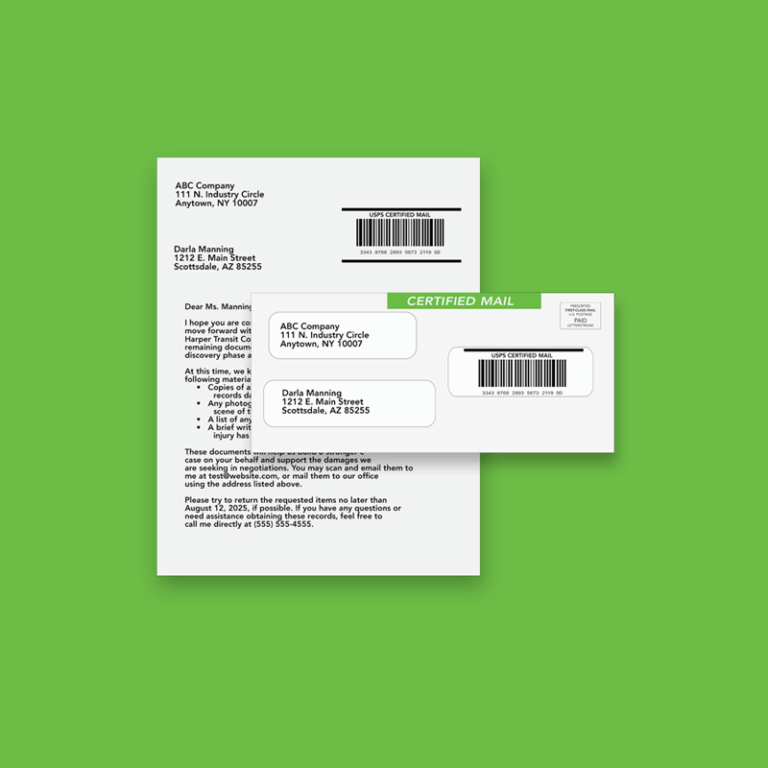
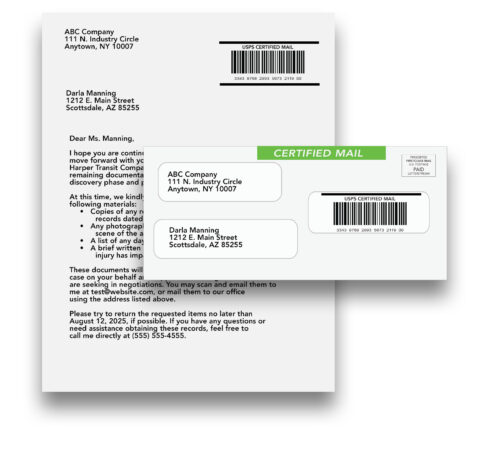
A Certified Mail online service is a platform that handles the entire USPS Certified Mail process digitally. Users upload their document, select service options like return receipt, and the provider prints, assembles, and sends the mail piece to USPS for processing. The sender receives a tracking number and can monitor the status through an online dashboard.
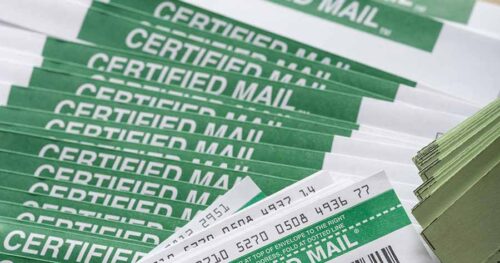
This approach differs significantly from traditional post office Certified Mail. The conventional process requires physical forms (PS 3800 for Certified Mail, PS 3811 for return receipt), a trip to the post office, manual form completion, and physical storage of green card receipts. Online services automate or eliminate each of these steps, reducing labor costs and improving record accessibility.
Digital Print-and-Mail Workflow
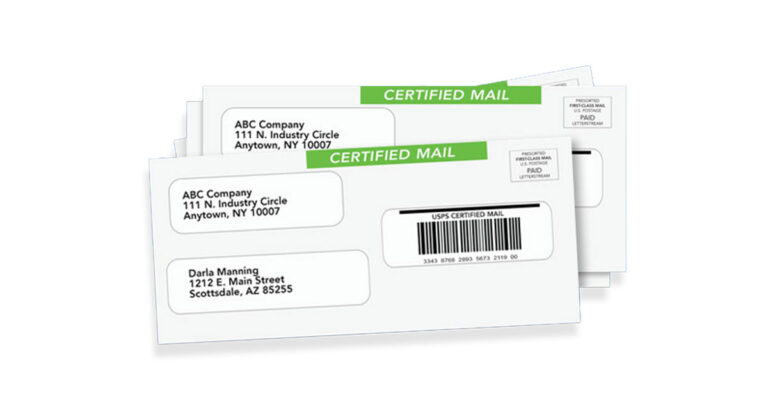
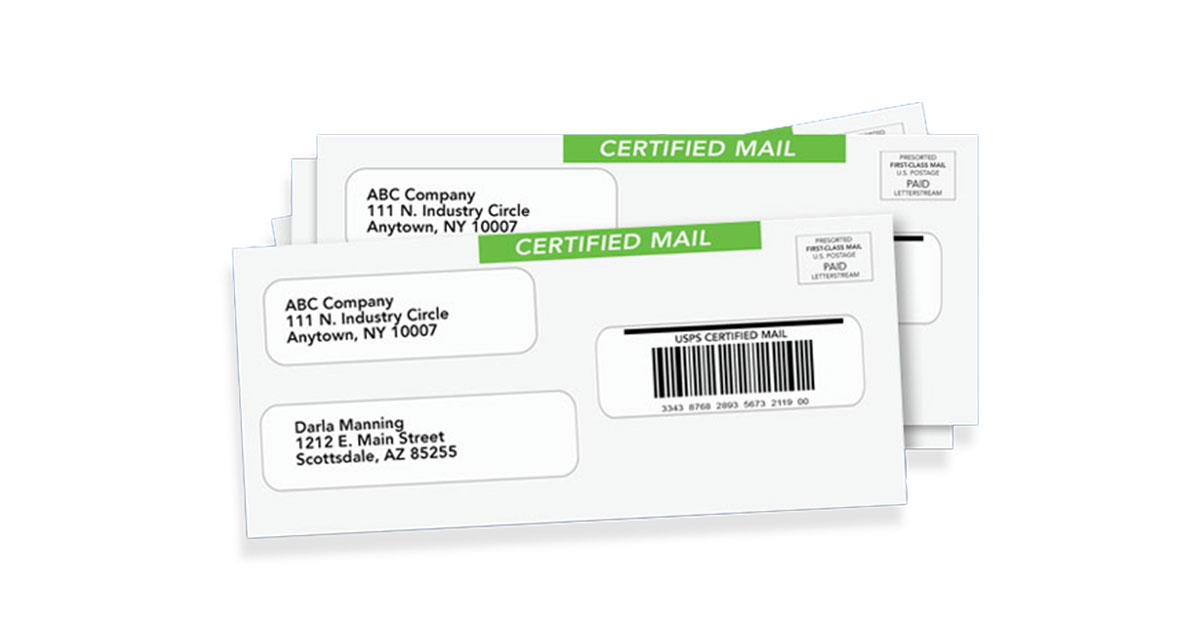
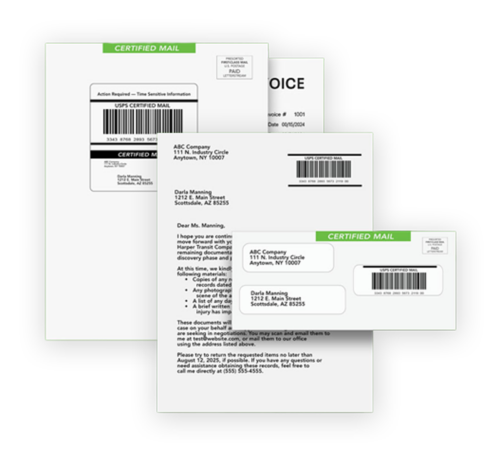
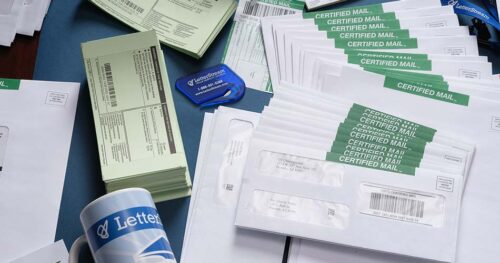
The digital workflow begins when users upload a PDF or CSV file through a web portal. The service handles printing, envelope assembly, Certified Mail label generation, and send-off to USPS. Providers like LetterStream process jobs with approximately 95% mailed the next business day, eliminating the need for supplies, forms, or in-person visits.
This workflow directly connects to the core benefit of eliminating manual mailroom tasks. Organizations no longer need to maintain inventory of Certified Mail envelopes, print labels, or assign staff to post office runs. The entire process moves from hours of manual work to just minutes of document upload and confirmation.
USPS Integration and Compliance
Online Certified Mail services maintain full compliance with USPS standards for addressing, weight limits, proper mail class, and approved label formats. The tracking number generated is an official USPS tracking number, and delivery confirmation comes through the same system used for mail sent directly at the post office.
Courts accept USPS tracking and signatures from return receipts—both physical green card and electronic return receipt—as legal evidence of mailing and delivery. This makes online Certified Mail fully valid for legal notices, tax communications, employment law compliance, and contractual obligations. Services that maintain robust audit trails preserve metadata, including date, time, address, and signature for compliance documentation.
Understanding these operational foundations sets the stage for examining the specific features that make online Certified Mail services valuable for high-volume or compliance-critical mailing operations.
Key Features and Capabilities
The practical value of Certified Mail online services becomes clear when examining their core capabilities. These features directly address the tracking, documentation, and efficiency needs of organizations handling compliance-critical mail.
Electronic Return Receipts and Tracking
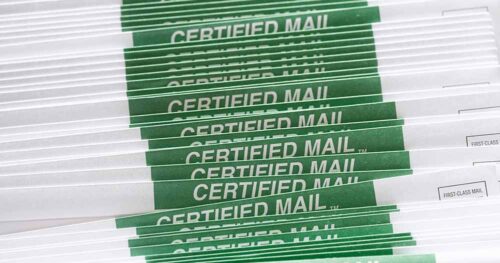
Traditional Certified Mail with return receipt required waiting for a physical green card to arrive by mail—a process that could take weeks and risked lost documentation. The electronic return receipt option provides the same proof of delivery digitally, with signature confirmation sent as a PDF to the sender’s email or dashboard.
Real-time USPS tracking allows senders to monitor each mail piece through acceptance, transit, and delivery. Tracking updates appear in online dashboards, eliminating the need to manually check the USPS website for each tracking number. For organizations sending legal notices or time-sensitive compliance mailings, this visibility provides immediate confirmation that delivery requirements have been met.
Bulk Processing and Automation
Organizations sending hundreds or thousands of Certified Mail letters monthly benefit from bulk processing capabilities. Services support batch uploads, allowing users to submit multiple documents simultaneously rather than processing each piece individually. Some providers offer API integrations that connect directly to case management, billing, or customer relationship systems.
Automation features include scheduling recurring mailings, setting up templates for common document types, and configuring user roles for team workflows. For HOAs sending monthly violation notices or legal firms handling ongoing case communications, these capabilities transform Certified Mail from a labor-intensive task into an automated process.
Document Management and Storage
Digital record keeping addresses one of the most significant risks of traditional Certified Mail: lost or damaged green cards and receipts. Online services maintain searchable archives of every mailing, including the document sent, tracking information, and proof of delivery with signature.
Many providers retain these records for seven to ten years, supporting long-term compliance requirements and audit readiness. When disputes arise over whether notice was properly delivered, organizations can retrieve complete documentation from their dashboard rather than searching through physical file cabinets.
These operational advantages make online Certified Mail services particularly valuable for organizations with high mail volumes, strict compliance requirements, or limited administrative staff.
The next section addresses how to evaluate providers and implement these services effectively.
Implementation Process and Service Comparison
Selecting and implementing an online Certified Mail service requires evaluating organizational needs, comparing provider capabilities, and establishing workflows that integrate with existing operations.
Step-by-Step Implementation Process
Most organizations can begin using online Certified Mail services right away but may need a few business days to gather information on their end. The implementation process typically follows these steps:
- Assess mailing volume and requirements: Identify monthly Certified Mail volume, typical document lengths, and specific needs like electronic return receipt.
- Evaluate provider features: Compare turnaround time, cost per Certified Mail piece, dashboard capabilities, archive retention periods, and API availability for system integration.
- Create account and configure settings: Set up user accounts, payment methods, return address information, and any team permissions required for multi-user access.
- Conduct pilot mailing: Send a small batch of non-critical mailings to verify the process, confirm tracking functionality, and review delivery confirmation quality.
- Establish workflow procedures: Document the process for staff, integrate with existing case or customer management systems, and define responsibilities for monitoring delivery status.
Service Comparison Table
Criterion | Traditional USPS (Post Office) | Online Print-and-Mail Service |
Cost per piece (1 page, no return receipt) | ~$5.58 (Certified Mail fee + first class mail postage) plus labor and trip time | ~$8-10 including printing, postage, and processing |
Cost with electronic return receipt | Add $2.62 for ERR or $4.10 for green card | ~$11-12 total with ERR included |
Turnaround to USPS entry | Same day if visiting post office | Most services: next business day |
Tracking method | Manual USPS website checks | Integrated dashboard with tracking updates |
Record retention | Physical storage of green cards and receipts | Digital archive searchable for 7-10 years |
Volume scalability | Limited by staff availability | Bulk uploads, API integration, no practical limits |
The per-piece cost of online services runs higher than USPS base fees alone, but this comparison excludes labor costs for traditional methods. Organizations should calculate the true cost including staff time for form completion, post office trips, and physical filing. Many organizations find that online services reduce total cost when labor is factored in, particularly for volumes exceeding 20-30 pieces monthly.
Understanding these tradeoffs helps organizations select the approach that matches their operational priorities—whether emphasizing lowest per-piece cost or maximum efficiency and compliance assurance.
Common Challenges and Solutions
Implementing online Certified Mail services presents predictable challenges that organizations can address with proper planning and provider selection.
Integration with Existing Workflows
Many organizations operate with established processes built around physical mail handling. Staff may resist change, and existing systems may not easily connect to new mailing platforms.
Solution: Choose providers offering API or webhook integrations compatible with existing case management, billing, or customer systems. Start with a parallel operation period where both traditional and online methods run simultaneously, allowing staff to build confidence before full transition. Most modern providers support standard integration methods that technical teams can implement without extensive custom development.
Volume and Timing Requirements
High-volume senders face concerns about whether online services can handle large batches before deadlines. Regulatory mailings often require proof that notice was mailed by specific dates.
Solution: Select providers with documented service level agreements for mail entry timing. Many services guarantee one-business-day entry (for Certified Mail) into the USPS system, with some offering same-day processing for time-sensitive mailings. For critical deadlines, submit mailings 24-48 hours before required dates to accommodate any processing delays. Request delivery confirmation for tracking updates that document when mail entered the postal system.
Compliance and Record-Keeping
Organizations in regulated industries need assurance that digital proof meets legal requirements and that records will be accessible for audits or litigation.
Solution: Verify that providers generate official USPS tracking numbers and preserve complete metadata including timestamps, addresses, and signature confirmation. Choose services offering electronic verification and archive retention periods matching organizational compliance requirements—typically seven to ten years for legal and financial records. Establish backup procedures for downloading and storing critical delivery documentation in organizational systems.
With these challenges addressed, organizations can confidently implement online Certified Mail services knowing that common obstacles have proven solutions.
Conclusion and Next Steps
Certified Mail online services transform a time-consuming manual process into an efficient digital workflow. Organizations gain reliable USPS tracking, electronic proof of delivery, searchable archives, and freedom from post office trips—all while maintaining full compliance with legal notice requirements.
Immediate next steps:
- Calculate current Certified Mail volume and estimate total cost including labor for traditional methods
- Identify one workflow (such as legal notices or HOA communications) for initial pilot implementation
- Establish evaluation criteria including cost per piece, turnaround time, and archive accessibility
Organizations already using print-and-mail services for regular correspondence may find that adding Certified Mail capabilities requires minimal to no additional setup. Those handling invoice and statement mailings, healthcare communications, or nonprofit donor correspondence can often consolidate multiple mailing needs with a single provider offering both First-Class Mail and Certified Mail options.
For teams ready to eliminate mailroom bottlenecks and gain reliable tracking and proof of delivery, exploring online Certified Mail solutions represents a practical first step toward modernizing business-critical mail operations.
Frequently Asked Questions
How much does Certified Mail online service cost compared to USPS?
Online services typically charge $8-12 per Certified Mail piece including printing, postage, and electronic return receipt. Traditional USPS fees run approximately $5.58 for Certified Mail with first class postage, plus $2.62-4.10 for return receipt—but this excludes labor costs for forms, post office visits, and filing. When labor is included, online services often deliver comparable or lower total costs for regular senders.
Can online Certified Mail be used for legal notices and compliance mailings?
Yes. Online Certified Mail uses official USPS Certified Mail labels and tracking numbers. Courts accept USPS tracking and return receipts—including electronic return receipts—as valid proof of mailing and delivery. This makes online services appropriate for legal notices, tax communications, employment law compliance, landlord-tenant notices, and other statutory requirements.
How quickly can Certified Mail be processed and delivered through online services?
Most online providers process and enter mail into the USPS system within one business day of document submission. USPS delivery times for Certified Mail typically range from three to seven business days after entry, consistent with priority mail and First-Class mail delivery standards. Total time from upload to delivery generally runs four to eight business days. However, these are not guaranteed delivery times. USPS can often take longer to get Certified Mail delivered. It’s important to note that once the mail leaves a print and mail provider, like LetterStream, the delivery and timeframe is out of their hands.
What proof of delivery options are available with online Certified Mail?
Online services offer electronic return receipt, which provides a digital signature and delivery confirmation delivered as a PDF. Traditional green card (physical return receipt) remains available through most providers for situations requiring it. Some services also support signature confirmation and restricted delivery options for mailings requiring only the named recipient to sign.
Is online Certified Mail suitable for HOA notices and healthcare communications?
Online Certified Mail works well for both applications. HOAs use Certified Mail for violation notices, lien notifications, and governance communications where proof of timely notice matters. Healthcare organizations send required patient communications, privacy notices, and insurance-related mailings. Both benefit from the digital archives and compliance documentation these services provide.
How does tracking work with Certified Mail sent through online services?
Each Certified Mail piece receives a USPS tracking number when it enters the postal system. Senders monitor delivery status through the provider’s online dashboard, which displays tracking updates including acceptance, in-transit status, and delivery confirmation. This eliminates the need to manually check the USPS website for each mailing and provides a centralized view of all active and completed mailings.