

Introduction
Sending an HOA violation letter seems straightforward until a homeowner claims they never received it, a fine gets contested in court, or a lien is thrown out because the notice wasn’t mailed correctly. HOA violation letter mailing is one of the most operationally critical—and legally vulnerable—tasks community managers and board members handle. The board of directors is responsible for ensuring compliance with the community’s governing documents, making proper mailing of notices essential. Getting it wrong doesn’t just delay enforcement; it can expose the association to costly legal disputes and undermine the entire violation process.
This guide covers the legal requirements, proper mailing methods, and documentation best practices for mailing HOA violation notices. It’s written for HOA board members, property managers, compliance teams, and management companies who need to enforce rules consistently while protecting the association from procedural challenges. Whether the community handles mailings in-house or uses a professional mailing service, understanding these requirements is essential.
The short answer: Most states require HOA violation letters and hearing notices to be sent via Certified Mail with return receipt requested—especially when fines, hearings, or liens are involved. Governing documents may impose additional requirements. Proof of mailing is critical for any enforcement action to hold up legally.
By the end of this guide, readers will understand:
- Which mailing methods meet legal requirements in key states
- How to document mailings to defend against non-receipt claims
- Step-by-step procedures for Certified Mail mailing
- How to handle undeliverable mail and address disputes
- Cost-effective approaches for communities with frequent violations

Role of the HOA Board in Violation Enforcement
The HOA board is at the heart of maintaining order and upholding the standards set forth in the community’s governing documents. Their role in violation enforcement is to ensure that all residents adhere to HOA rules, which are designed to protect property values and foster a harmonious living environment. When a potential HOA violation is identified, it is the responsibility of the HOA board to act promptly and fairly. This often begins with sending a formal violation letter, also known as an HOA violation notice, to the homeowner. The board must clearly communicate the nature of the violation, reference the specific rule from the governing documents, and outline the steps required to correct the violation. Throughout the violation process, the board should work with homeowners in good faith, offering guidance and support to resolve the matter amicably. By consistently enforcing rules and providing proper notice, the HOA board helps maintain the integrity of the community and ensures that all residents are treated equitably.
Understanding Proper Service Requirements for HOA Violation Letters
“Proper service” in the HOA context means mailing a violation notice in a way that meets both statutory requirements and the community’s governing documents, including the regulations outlined within those documents. When done correctly, proper service ensures the homeowner receives clear notice and an opportunity to cure the violation—and the association preserves its ability to enforce rules through fines, liens, or legal action.
Mailing requirements protect both parties. Homeowners receive due process and fair treatment. HOAs gain defensible documentation if enforcement is challenged. HOA management is responsible for overseeing these processes and ensuring compliance. Without proof that a written notice was delivered correctly, associations risk having fines invalidated, liens voided, or board decisions reversed in court.
Legal Notice Requirements by State
State law dictates minimum mailing requirements for HOA violation notices, hearing notices, and fine letters. These requirements vary significantly, and associations must comply with both state statutes and their own CC&Rs.
Texas (Property Code § 209.006): Violation and fine notices must be sent via Certified Mail or First-Class Mail to the owner’s last known mailing address. Notices must describe the specific rule violated, the amount due (if applicable), the cure period, and the right to a hearing. Local noise ordinances may also apply and should be considered when issuing violation notices.
California (Davis-Stirling Act, Civil Code § 4040-4041): As of January 2023, associations must request each member’s preferred receiving method. If a homeowner specifies email, the association may send individual notices electronically. If no preference is stated, notices requiring individual delivery must go via First-Class Mail, Certified Mail, Registered Mail, or overnight delivery to the address on file. Local noise ordinances may also apply and should be considered when issuing violation notices.

Virginia (Code § 55.1-1819): Before imposing a fine, the HOA must provide written notice of the alleged violation and a reasonable opportunity to cure. The notice must reference the association’s fine schedule, outlining the specific amounts that may be levied if the violation is not corrected. Hearing notices must be hand-delivered or sent by Registered or Certified Mail, return receipt requested, at least 14 days before the hearing. Hearing results must be delivered the same way within seven days.
Colorado (Revised Statutes § 38-33.3-209.5): For delinquency-related violations, associations must send notice by Certified Mail, return receipt requested, and contact the owner by two additional methods (telephone, text, or email). Non-delinquency rule violations require a 30-day cure period—or 72 hours for health and safety emergencies. The notice should also reference the association’s fine schedule as a required element when fines are involved.
Governing documents may impose stricter requirements than state law. When conflicts exist, state statutes typically override internal policies, but associations should consult legal counsel to confirm which rules apply.
Governing Document Specifications
CC&Rs and bylaws often dictate exactly how violation letters must be sent. Some require Registered USPS mail to the homeowner of record. Others specify that Certified Mail with return receipt is mandatory for any formal notice. These internal policies carry legal weight—failure to follow them can invalidate enforcement actions even if state law requirements were technically met. It is also important to include the quote rule from the governing documents in the violation letter, referencing the specific bylaw or rule being cited. Including the quote rule ensures transparency and proper documentation for enforcement or fines.
Many governing documents also establish address requirements. Homeowners may be required to provide an alternate mailing address in writing; otherwise, the property address is used. This matters because sending a notice to the wrong address—even in good faith—can defeat service.

The relationship between internal policies and legal mailing standards requires careful alignment. Associations should periodically review governing documents against current state law to identify conflicts and ensure compliance procedures match both sets of requirements. Understanding why a rule exists helps ensure fair enforcement and promotes compliance, as it clarifies the purpose behind community guidelines.
Understanding these foundational requirements sets the stage for selecting the right mailing method for each situation.
The Violation Process: From Identification to Notification
The violation process in an HOA community is designed to be systematic and transparent, ensuring that all parties involved understand their rights and responsibilities. It typically starts when a potential violation is observed—this could be reported by a neighbor, noticed by a board member, or found during a routine inspection. Once a possible HOA violation is identified, the HOA board reviews the governing documents to confirm whether a specific rule has been broken. If the violation is validated, the next step is to send a formal violation letter, or HOA violation notice, to the homeowner. This official notice details the specific rule that has been violated, describes the required corrective actions, and sets a deadline for compliance. The letter serves as both a record of the violation and an invitation for the homeowner to address the issue, ensuring that the violation process is fair, consistent, and in line with the community’s standards.
HOA Violation Letter Mailing Methods and Applications
With legal requirements established, the next decision is which mailing method to use for each type of notice. Selecting the appropriate mailing method is a key part of managing violations efficiently, as it helps streamline the process and ensures compliance with HOA rules. The choice depends on statutory mandates, governing document specifications, cost considerations, and the level of legal protection needed.
Certified Mail with Return Receipt
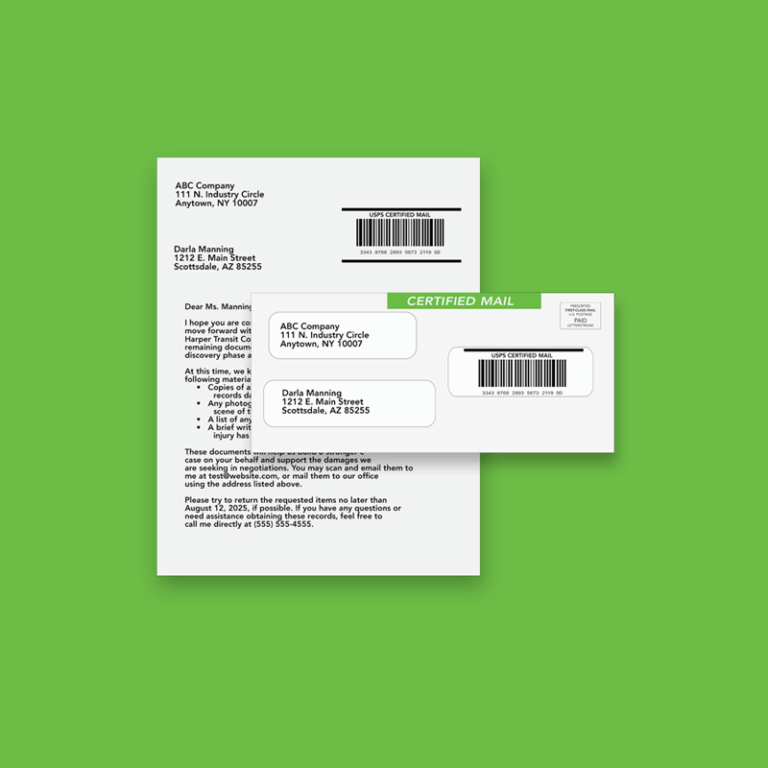
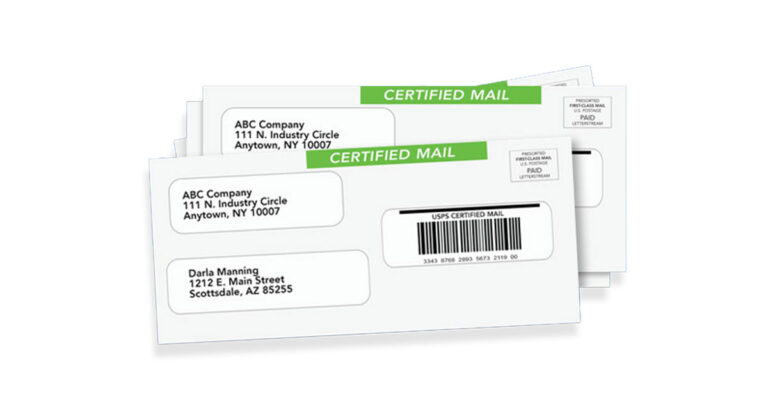
Certified Mail with return receipt requested provides the strongest proof of mailing and delivery for HOA violation letters. The sender receives a tracking number, the postal service maintains delivery records, and the signed return receipt confirms the property owner (homeowner) received the notice.
When Certified Mail is required: Most states mandate Certified Mail for hearing notices, fine notifications, lien actions, and pre-foreclosure communications. Texas requires it for violation notices when fines or suspension of privileges are involved. Virginia requires certified or registered mail for hearing notices and results. Colorado requires it for delinquency notices.
When Certified Mail is recommended: Even when not legally required, Certified Mail is advisable for any formal violation letter, second notice, or final notice where proof of delivery may become important. If the violation could escalate to legal action, Certified Mail creates a defensible record from the start.
Timing considerations: Certified Mail usually takes 2-5 business days domestically but can take up to weeks due to USPS delays. Return receipts may also take additional days to arrive.
Legal protection benefits: The signed return receipt is direct evidence that the property owner received the notice. Even if the property owner refuses to sign, postal records document the delivery attempt. This documentation is often the deciding factor when violations are challenged in hearings or court. Failure to respond to Certified Mail can result in potential fines, making timely action essential for property owners.
Hand Delivery and Personal Service
Hand delivery provides immediate, verifiable service when Certified Mail isn’t practical or when an urgent timeline applies.
Appropriate situations: Hand delivery works well for health and safety emergencies requiring 72-hour cure periods, situations where Certified Mail has already failed, or properties where the owner is known to be present. Some associations use hand delivery for first violation notices to establish a personal, cooperative tone before escalating. A property manager may also be responsible for delivering notices in person. It is important to deliver these notices in a timely manner, especially in urgent situations, to ensure compliance and prevent escalation.
Documentation requirements: Hand delivery without documentation is legally weak. Best practice is to have the recipient sign and date a receipt acknowledging delivery. If the homeowner refuses to sign, the person delivering the notice should document the date, time, location, and circumstances in writing. Witness signatures or photographs showing delivery location strengthen the record.
Safety and professionalism: Board members or property managers delivering notices in person should approach the task professionally. Confrontational encounters can escalate quickly. Many associations prefer to use Certified Mail precisely to avoid personal interactions during enforcement.
Regular Mail and Electronic Email Sending
First-Class Mail and email sending have limited roles in formal violation notice procedures.

Limitations of regular mail: Standard First-Class Mail provides no proof of delivery. The homeowner can simply claim the letter never arrived, and the association has no documentation to refute this. For initial courtesy reminders or a first notice about a minor issue, regular mail may be acceptable—but it should never be used for formal violation letters, fine notices, or any communication that may require proof.
Email rules: Email is increasingly permitted where state law allows and the homeowner has provided written consent. California’s preferred delivery method requirements exemplify this trend. However, email carries significant risks: messages can be filtered as spam, delivery receipts can be disputed, and consent documentation must be airtight.
If an email bounces or goes undelivered, the association must fall back to physical mail immediately. Relying on email without a robust fallback procedure creates compliance gaps that can invalidate enforcement actions.
These methods form the toolkit for proper HOA violation letter mailing. The next section covers exactly how to implement them.
Step-by-Step Mailing Implementation and Documentation
Consistent procedures reduce errors, ensure compliance, and create the documentation trail needed to defend enforcement actions. The following workflows apply to most state requirements and governing document specifications, and can be used for any HOA notice, including a notice of violation.
Certified Mail Processing Procedure
Certified Mail is the standard for formal violation letters. This step-by-step process ensures proper handling for all stages, including the first formal notice, first notice, and second formal notice as part of the escalation process.
Step 1: Prepare the violation letter with all required elements. Include the specific rule violated (quote the rule from CC&Rs or community guidelines), the date the violation was observed, the deadline to correct the violation, hearing rights if applicable, consequences of non-compliance, and contact information for questions. Use a consistent template reviewed by legal counsel.
Step 2: Verify the homeowner’s address of record. Check association records for the property owner’s current mailing address. If the homeowner has provided an alternate address in writing, use that. If governing documents require a preferred delivery method, confirm compliance. Sending to the wrong address can invalidate the entire notice.
Step 3: Complete Certified Mail forms and obtain tracking numbers. Fill out USPS Form 3800 (Certified Mail Receipt) with the recipient’s address. Request a return receipt (Form 3811) for proof of delivery. Record the tracking number before mailing.
Step 4: Send via USPS with return receipt requested. Mail the violation letter at a post office or through an authorized mail service. Retain the Certified Mail receipt with the tracking number.
Step 5: Document the mailing date and tracking information. Enter the mailing date, tracking number, and recipient address in the homeowner’s file. This creates a contemporaneous record that can be referenced later. Be sure to document all previous communications with the homeowner, including any prior first notice or first formal notice, to maintain a complete record of the escalation process.
Step 6: Monitor status and file receipts. Track delivery through USPS or your mailing service. When the signed return receipt arrives, file it with the original violation record. If the letter is returned undelivered, document the attempt and initiate fallback procedures.

Alternative Approach: Using a Certified Mail Service
Many HOAs and property management companies choose to outsource much of the Certified Mail process to a mailing service. Rather than printing letters, completing USPS forms, tracking mailings, and storing receipts manually, managers can upload their violation notices through an online platform that handles printing, Certified Mail preparation, mailing, tracking, and proof-of-mailing recordkeeping.
Even when using a mailing service, the same compliance principles apply: verify the homeowner’s address, maintain accurate records, monitor delivery status, and retain proof of mailing and delivery. The difference is that much of the administrative work is automated, reducing staff time and minimizing the risk of errors.
Corrective Actions and Resolutions After Notice Delivery
Once the HOA violation letter has been mailed, the focus shifts to resolution. The homeowner is expected to take the corrective actions outlined in the violation letter to address the issue. The HOA board should be available to clarify any questions and provide resources or support to help the homeowner comply with the governing documents. If the homeowner does not correct the violation within the specified timeframe, the HOA board may escalate the matter by issuing a second notice or considering further action, such as imposing fines or consulting legal counsel. Throughout this process, it is crucial for the board to document every step, including the initial notice, any second notice, and all communications with the homeowner. This thorough recordkeeping ensures that the HOA board can demonstrate compliance with procedures and provides a clear history of the violation and the steps taken to resolve it, which is essential if further action or legal proceedings become necessary.
Homeowner Rights and Responsibilities
Homeowners in an HOA community have important rights and responsibilities when it comes to violation notices. Every homeowner is entitled to proper notice of any alleged violation, which must include a clear explanation of the issue, the specific rule or regulation from the governing documents that has been violated, and the corrective actions required. Homeowners have the right to respond to the violation notice, present relevant evidence, and, if necessary, request a hearing or seek legal counsel. At the same time, it is the homeowner’s responsibility to comply with all HOA rules and regulations, as well as any corrective actions outlined in the notice. Staying informed about state law and the community’s governing documents helps homeowners understand their obligations and the procedures for addressing violations. By fulfilling these responsibilities and exercising their rights, homeowners contribute to a fair and well-managed community.
Tips for Homeowners Receiving an HOA Violation Letter
Receiving an HOA violation letter can be stressful, but handling it proactively can lead to a quick and positive resolution. Homeowners should start by carefully reading the violation letter to understand the nature of the HOA violation, the corrective actions required, and the deadline for compliance. If there is any confusion or disagreement about the violation, it is important to contact the HOA board or management company promptly to discuss the matter and provide any relevant evidence or explanations. Keeping a record of all communications and actions taken—including emails, letters, and photos of corrective work—can be invaluable if further action is needed. By responding in good faith and working collaboratively with the HOA board, homeowners can often resolve violations efficiently, avoid additional notices or fines, and help maintain a positive atmosphere within the community.

Common Mailing Challenges and Solutions
Even well-designed procedures encounter obstacles. Proper mailing is essential for effective HOA violation enforcement, as it ensures that homeowners are notified in accordance with community guidelines and that the HOA’s authority is upheld. These common challenges have practical solutions that maintain compliance while reducing operational burden.
Failure to address violations after receiving a letter can result in other consequences beyond fines, such as loss of access to community amenities or additional penalties.
Undeliverable Mail and Bad Addresses
Violation letters returned as undeliverable undermine enforcement before it starts. The homeowner may have moved, provided an incorrect address, or failed to update their contact information.
Solutions: Require homeowners to provide current mailing addresses when purchasing property and submit updates in writing. Cross-reference property records against association files annually. When mail is returned, attempt delivery to the property address if different from the mailing address. Document all delivery attempts. Some states permit posting notices at the property as a secondary method—check governing documents and state law before using this approach.
Timing and Processing Delays
Legal deadlines don’t pause for postal service delays. Virginia requires hearing notices at least 14 days in advance. Missing this window—even by one day—can invalidate the hearing.
Solutions: Build buffer time into mailing schedules. If a hearing is scheduled for the 20th, mail the Certified letter no later than the 1st to allow for postal delays and return receipt processing. Use expedited delivery (FedEx 2Day) when standard Certified Mail timing is too tight. Track delivery status actively and reschedule hearings if delivery is delayed.
Proof of Delivery Disputes
Homeowners occasionally claim they never received a certified letter—even when records show delivery. Without proper documentation, these disputes become “he said, she said” situations.
Solutions: Always request return receipt (not just delivery confirmation). File signed receipts immediately upon arrival. If the homeowner refuses to sign, retain postal records showing the delivery attempt. For hand delivery, use signed acknowledgment forms and witnesses. Consider photographing the delivery location if disputes are anticipated. Maintain all documentation for at least the statute of limitations period—often several years.
You can also use a print and mail service that keeps documentation in one platform, including tracking and electronic return recent signature.
Cost Management for Multiple Violations
Large communities with frequent violations can spend thousands of dollars annually on Certified Mail postage alone. In-house processing adds labor costs for preparing letters, completing forms, tracking receipts, and filing documentation.
Solutions: Use regular mail for genuine courtesy reminders about minor infractions (first warning letters with no enforcement implications). Reserve Certified Mail for formal notices, second notices, and any communication with legal significance. Consider professional print and mail services that handle Certified Mail at scale—these often reduce per-piece costs while providing better tracking and documentation.
Conclusion and Next Steps
Proper HOA violation letter mailing protects the association’s enforcement authority while ensuring homeowners receive fair notice and opportunity to cure violations. The key requirements: use Certified Mail with return receipt for formal notices and hearings, verify addresses before mailing, document every step, and maintain records for years.
Immediate action steps:
- Review governing documents and applicable state statutes to confirm current mailing requirements
- Audit homeowner address records and implement a process for collecting updates
- Create or update violation letter templates to include all legally required elements
- Establish consistent documentation procedures for tracking mailings and receipts
- Evaluate whether in-house mailing or professional services better serve the community’s volume and compliance needs
For communities managing frequent violations or struggling with documentation consistency, online Certified Mail and print-and-mail services eliminate manual processing while creating automatic audit trails. These solutions reduce labor burden on property managers and board members while ensuring every notice meets legal requirements.
Frequently Asked Questions
Can HOAs send violation letters via email instead of postal mail?
Only if state law permits electronic sending and the homeowner has provided written consent or specified email as their preferred delivery method. California allows email for individual notices when the member has stated this preference. Most states still require physical mail for hearing notices and fine letters regardless of email consent. Without valid consent documentation, email alone typically does not satisfy legal service requirements.
How long does Certified Mail take for HOA violation notices?
USPS Certified Mail typically takes 2-5 business days for domestic delivery but can can take longer due to USPS delays. Return receipts may take additional days to arrive back to the sender. Legal notice periods usually begin on the mailing date (under the mailbox rule), not the delivery date—but associations should build buffer time into schedules to ensure compliance with minimum notice periods.
What happens if a Certified violation letter is returned undelivered?
The association should document the delivery attempt and try alternative methods: sending to a different address on file, attempting hand delivery, or posting at the property if governing documents permit. Undelivered notices weaken enforcement positions, so fallback procedures are essential. Some states consider a properly addressed certified letter as served even if undelivered—consult legal counsel on specific state rules.
Do all HOA violation notices require Certified Mail mailing?
Not always. State law may require Certified Mail only for hearing notices, fine notifications, liens, or foreclosure-related communications. Initial courtesy reminders or first notices—such as for minor infractions like vehicles parked in unauthorized areas—may be sent via regular mail in some jurisdictions. However, governing documents may impose stricter requirements than state minimums. When in doubt, Certified Mail provides the safest default for any formal violation letter.
How should HOAs document hand delivery of violation letters?
Obtain a signed and dated receipt from the recipient acknowledging it as received. If the recipient refuses to sign, document the refusal in writing—including date, time, location, and the name of the person who attempted delivery. Use a witness whenever possible. Photographs showing the notice placement may also support documentation.