

Introduction
Businesses sending hundreds or thousands of documents each month know the frustration: staff buried in manual envelope stuffing, missed compliance deadlines, no reliable way to prove delivery, and postage costs that seem impossible to control. These bulk printing and mailing bottlenecks drain valuable time and create real risk when business-critical mail fails to arrive on schedule.
Bulk printing and mailing services solve these problems by automating the entire workflow—from document creation through USPS sending—while providing tracking, compliance documentation, and significant cost savings through postal discounts. Many providers offer direct mailing services that go beyond basic mailing, including advanced features such as analytics, data modeling, and targeted campaigns for a more comprehensive and reliable solution.
This guide covers business-critical document distribution, compliance mailings, and automated print-and-mail workflows. It focuses on organizations sending 500+ pieces monthly, including HOAs, healthcare organizations, legal firms, nonprofits, and businesses with regular invoice or statement cycles. Basic marketing postcards and one-off mailings fall outside this scope.
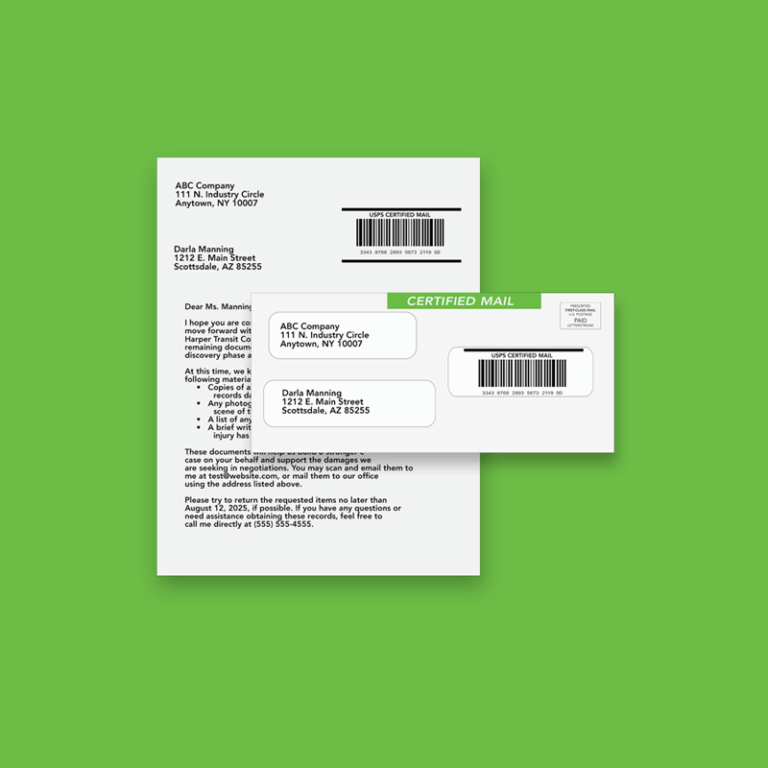
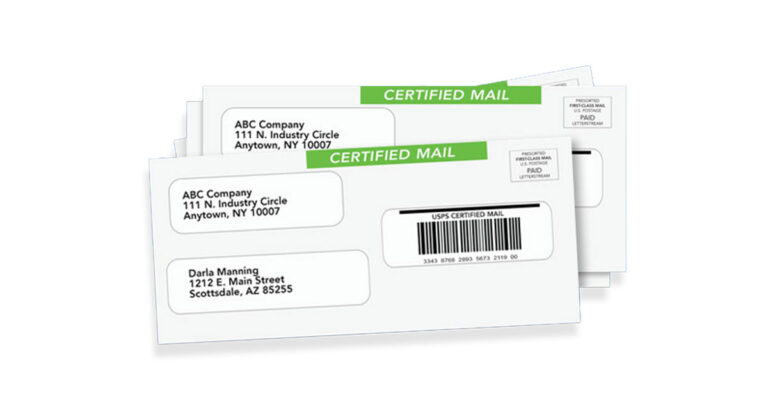
The direct answer: Bulk printing and mailing services handle document production, address validation, postal sorting, and delivery tracking for Certified Mail in one integrated workflow. Organizations that implement these services typically reduce manual mail processing labor by 80% or more while ensuring USPS compliance and maintaining proof of delivery for every piece.
By the end of this guide, readers will understand:
- How bulk mailing services differ from traditional in-house mail operations
- Which document types benefit most from automated mailing workflows
- The step-by-step implementation process from document upload to mailing (which typically starts with uploading files in formats like CSV, PDF, Word, or Excel to ensure data accuracy and compatibility)
- Cost structures, postal discounts, and volume thresholds that drive savings
- How to choose between in-house, outsourced, and hybrid solutions
- The availability of free resources or services, such as free templates or free proofing, offered by some providers
Understanding Bulk Printing and Mailing Services
Bulk printing and mailing refers to integrated services that handle high-volume document production, address verification, USPS presort processing, and postal mailing as a single automated workflow. Rather than managing printing, envelope stuffing, postage calculations, and post office trips separately, these services consolidate everything into one streamlined process. Using a single provider eliminates the need to coordinate with multiple vendors, simplifying the workflow.
For businesses struggling with internal mailroom bottlenecks—where staff spend hours on manual document handling instead of core work—bulk mailing automation eliminates the operational drag while adding tracking and compliance capabilities that manual processes cannot match. Comprehensive providers also offer a range of shipping options and integrated shipping services to meet various business needs.
Traditional In-House Mail Operations vs. Automated Solutions
Traditional in-house mail operations involve printing documents on office equipment, manually folding and inserting pages into envelopes, calculating postage based on weight and destination, applying stamps or meter impressions, and transporting mail to the post office. Tracking relies on manual logs, and proof of delivery for legal or compliance purposes often requires expensive Certified Mail with separate paperwork for each piece.
These manual workflows create several problems: inconsistent print quality across batches, addressing errors that increase returned mail, difficulty meeting tight deadlines when volume spikes, and no automated way to confirm if it was received. Staff members spend valuable time on repetitive tasks that could be automated.
Automated bulk mailing services transform this process. Organizations upload files in supported formats such as PDF, Word, Excel, or CSV through an online order system, and the service handles variable data printing, CASS-certified address validation as an option, USPS presort optimization, and delivery tracking for Certified Mail. The entire workflow moves from file formats to mail being sent with minimal manual intervention, often within 2-3 business days for production plus standard USPS delivery times. LetterStream sends out mail within 2 business days, but most go out the next day.

Types of Bulk Mail Communications
Different business communications have distinct requirements that bulk mailing services must accommodate:
Transactional mail includes invoices, statements, billing notices, and insurance claims. These documents require precise delivery timing, accurate addressing to avoid payment delays, and often need proof of mailing for audit purposes. First-Class Mail or First-Class presort typically provides the right balance of delivery speed and cost for transactional communications. However, this isn’t guaranteed.
Legal and compliance notices carry higher stakes. HOA violation notices, court documents, healthcare communications, and regulatory mailings often require Certified Mail with delivery confirmation that holds up in legal proceedings. These communications demand strict handling, HIPAA compliance for healthcare contexts, and documented chain of custody.
Donor and membership communications from nonprofits require personalization through variable data printing while managing costs across large mailing list volumes. Fundraising campaigns and membership renewals benefit from marketing mail rates while still requiring tracking to measure campaign effectiveness. Bulk mailing services can also be integrated into broader marketing campaigns, supporting multi-channel strategies for greater outreach. In addition to direct mail, organizations can send other marketing materials such as newsletters, calendars, and banners as part of their bulk mailing strategy.
Understanding which category business mail falls into determines the service level, postal class, and tracking requirements needed—and directly impacts both cost and compliance obligations.
When it comes to marketing mail, a well-designed postcard meets the needs of both visual appeal and effective direct mail strategy, making it a popular choice for targeted outreach.
Planning a Direct Mail Campaign
A successful direct mail campaign starts with careful planning and a clear understanding of your objectives. Begin by identifying your target audience—knowing who you want to reach will shape every aspect of your campaign, from the type of marketing materials you choose to the messaging you craft. Whether you’re sending postcards, letters, or other printed pieces, your materials should align with your campaign goals and appeal to potential customers.
Next, select a mailing service that can manage the entire process, including printing, addressing, and sending your mail. Consider the scale of your campaign, your budget, and the timeline you need to meet. It’s also essential to familiarize yourself with USPS regulations to ensure your mailings are compliant and eligible for the best postage rates.
By thoughtfully planning each step—from defining your audience to choosing the right printing and mailing services—you can maximize the impact of your direct mail campaign and effectively promote your business, products, or services to customers who matter most.
Bulk Printing and Mailing Applications
With the foundational categories established, specific use cases illustrate where bulk printing and mailing services deliver maximum operational value. Businesses can use EDDM mapping to efficiently plan mailings to multiple zip codes, especially when promoting a new location. The common thread across these applications: replacing manual, error-prone processes with automated workflows that ensure compliance and provide delivery verification.
Business-Critical Document Distribution
Monthly statements and invoices represent the most common bulk mailing use case. Businesses that send 500+ pieces monthly spend significant staff time on printing, folding, inserting, and postage—time that scales linearly with volume. Automated services eliminate this manual work while ensuring documents reach customers on schedule.
Insurance communications add complexity with HIPAA requirements for any documents containing protected health information. Bulk mailing providers serving healthcare organizations must maintain appropriate security protocols, sealed envelope handling, and often offer Certified Mail options for sensitive notices. Case studies from healthcare implementations show turnaround improvements from 7 days to 2 days while achieving approximately 99% accuracy in document processing.
Nonprofit organizations benefit from variable data printing that personalizes donor communications while maintaining cost-effective bulk rates. Fundraising campaigns, acknowledgment letters, and membership renewals can incorporate recipient-specific details without sacrificing the postal discounts that make high-volume direct mailing economically viable.

Marketing and Promotional Campaigns
While this guide focuses on business-critical communications, bulk mailing services also support direct mail campaigns and marketing materials distribution. Variable data printing enables targeted messaging to different segments of a mailing list, with customizable templates that adjust content based on recipient data.
Event notifications and membership renewals combine transactional necessity with promotional opportunity. These communications benefit from professional print quality and reliable sending while taking advantage of marketing mail rates for cost efficiency.
For local political campaigns and small businesses reaching their local community, Every Door Direct Mail (EDDM service) offers mailing to specific addresses within selected carrier routes without requiring a named mailing list. EDDM retail options make this accessible even for organizations without a special mailing permit.
Compliance and Legal Notice Requirements
HOA communities face strict notification requirements for violation notices, board meeting announcements, and assessment communications. Many state laws specify delivery methods and timeframes, making proof of mailing essential. Bulk mailing services with Certified Mail automation provide the documentation HOAs need while eliminating the manual Certified Mail paperwork that burdens community managers.
Legal notifications requiring proof of service demand delivery confirmation that holds up in court. Automated Certified Mail options generate tracking numbers and delivery documentation for each piece, replacing manual trips to the post office with online access to delivery status and proof.
Healthcare appointment reminders and billing notices must comply with HIPAA requirements while reaching patients reliably. Organizations handling protected health information need mailing services that maintain appropriate security throughout the printing and postal system workflow—from document creation through final delivery.
These compliance applications share a common need: reliable proof that specific documents reached specific addresses by specific dates. Automated tracking through Intelligent Mail Barcodes and certified mail options provides this documentation at scale.
Custom Printing Options
Custom printing options empower businesses to create marketing materials that are both unique and highly personalized. With variable data printing, you can tailor text, images, and offers on each piece of mail, ensuring your message resonates with every recipient on your mailing list. Custom designs, specialty paper stocks, and premium finishes further enhance the look and feel of your mail, helping your brand stand out in the mailbox.
When evaluating printing services, consider factors such as print quality, flexible turnaround times, and overall cost. Many providers offer additional services like mailing list management and shipping, making it easier to coordinate every aspect of your campaign. By leveraging custom printing, you can create compelling marketing materials that capture attention and drive engagement with your target audience.
Mailing Lists and Data
The quality of your mailing list can make or break your direct mail campaign. A well-curated mailing list ensures your marketing materials reach the right audience, increasing the likelihood of a positive response and minimizing wasted mail. You can purchase a targeted mailing list from reputable vendors or build your own in-house, using customer data and advanced data segmentation to refine your reach.
It’s crucial to keep your mailing list up-to-date and compliant with USPS regulations to avoid undeliverable mail and maximize your return on investment. Many mailing services offer list processing and management, including address validation and deduplication, to help you maintain a clean and effective list. By investing in quality data and professional services, you can ensure your mailings are delivered to the right audience every time.
EDDM Retail and Service
Every Door Direct Mail (EDDM) retail and service is an accessible, cost-effective solution for businesses looking to connect with their local community. With EDDM, you can send mail to every address within a specific zip code or neighborhood—no mailing list required. This makes it an ideal option for small businesses, new locations, or local promotions where reaching a broad audience is key.
The USPS provides an EDDM online tool that simplifies campaign planning, allowing you to select carrier routes and estimate costs with ease. EDDM retail is especially useful for promoting grand openings, sales, or community events, helping you drive foot traffic and increase brand awareness. By leveraging door direct mail, businesses can efficiently reach potential customers in their area while keeping costs manageable.

Designing Effective Mailings
The design of your mail piece plays a pivotal role in capturing attention and driving results. Effective mailings feature eye-catching visuals, clear messaging, and a layout that guides the recipient toward your desired action. Use high-quality images, bold fonts, and vibrant colors to make your mail stand out, and tailor your content to resonate with your target audience.
Optimize your design for the specific format you’re using—whether it’s a postcard, letter, or brochure—and ensure it meets USPS regulations for size, address placement, and barcode requirements. Many mailing services offer customizable templates and design tools to help you create professional, compliant mailings. By focusing on both creativity and compliance, you can increase the likelihood that your mail is delivered promptly and generates a strong response from your audience.
Implementation Process and Service Comparison
Moving from understanding applications to actual implementation, organizations need clarity on both the step-by-step process and the service model that fits their needs. Full-service providers can eliminate the complexity of managing multiple vendors by offering comprehensive, single-source solutions. The right choice depends on volume, compliance requirements, and internal resources available for mail operations.
At the same time, companies like VistaPrint offer a wide range of printing and marketing solutions beyond direct mail, including branded merchandise and design tools.
Step-by-Step Bulk Mailing Process
Organizations should consider bulk mailing automation when they send 500+ pieces monthly, face compliance requirements that demand tracking and proof of delivery, struggle with tight deadlines that manual processing cannot reliably meet, or find staff spending excessive time on repetitive mail tasks.
The implementation process follows four main stages:
- Document preparation and template creation: Organizations create document templates that accommodate variable data fields for personalization. Templates must meet postal service requirements for address placement, barcode positioning, and envelope window alignment. Many providers offer customizable templates that handle these technical requirements automatically.
- Mailing list upload and address validation: The address list uploads through the provider’s system in standard file formats. CASS certification processing validates addresses against USPS databases, applying ZIP+4 codes and delivery point barcodes. NCOA (National Change of Address) processing identifies recipients who have moved within the past 48 months, dramatically reducing returned mail. This list processing step catches 8-15% of problematic addresses in typical business mailing lists.
- Print production and quality control: High-volume printing equipment produces documents with consistent print quality across the entire batch. Quality control checks verify print registration, address legibility, and barcode readability. Variable data printing inserts recipient-specific information into each piece without manual intervention.
- Postal processing: Finished mail pieces are sorted by zip code to qualify for automation presort discounts. Mail enters the postal service through bulk mail entry points, with tracking activated for pieces that include Intelligent Mail Barcodes or Certified Mail service. Depending on mail class and distance, USPS delivery typically takes 3-10 business days after postal induction but can take longer.
Service Options Comparison
Organizations choose between three primary models for bulk mail operations:
|
Criterion |
In-House Operations |
Full-Service Provider |
Hybrid Solution |
|---|---|---|---|
|
Cost per piece |
Higher (no presort discounts) |
Lower ($0.30-$0.55 typical) |
Moderate |
|
Setup time |
Months (equipment, permits, training) |
Days to weeks |
Weeks |
|
Compliance support |
Self-managed |
Provider-certified |
Shared |
|
Tracking capabilities |
Limited without investment |
Comprehensive |
Varies |
|
Volume minimums |
Any |
Often 500+ pieces |
Flexible |
|
Capital investment |
High (equipment, maintenance) |
Low (operational expense) |
Moderate |
|
Bulk mailing permit |
Required (approximately $275/year plus fees) |
Often included or shared |
May be required |
|
In-house operations make sense for organizations with consistent high volume, existing equipment investments, and staff expertise in USPS regulations. However, the capital costs for folder-inserters, addressing software, and presort equipment run into tens of thousands of dollars, plus ongoing maintenance and the bulk mailing permit fees. |
Full-service providers offer the fastest path to automated bulk mailing with minimal capital investment. They handle permits, maintain USPS certifications, and provide access to presort discounts through commingling with other customers’ mail. Cost per piece typically ranges from $0.30 to $0.55 depending on format, color, and volume—significantly lower than most in-house operations can achieve. Full-service providers manage all aspects of the mailing process in-house, eliminating the need to coordinate with multiple vendors and simplifying the entire bulk printing and mailing workflow for clients.
Hybrid solutions work for organizations that want to maintain control over document creation while outsourcing printing and postal processing. Mailing API integrations allow existing business systems to trigger automated print-and-mail workflows, combining internal data management with external production capabilities.
The right choice depends primarily on volume consistency, compliance complexity, and whether mail operations represent a core competency worth investing in versus a support function better outsourced to specialists.
Common Challenges and Solutions
Organizations implementing bulk mailing for the first time—or transitioning from manual operations—encounter predictable challenges. Understanding these issues and their solutions helps ensure successful implementation.
Address Accuracy and USPS Compliance
The challenge: Outdated or incorrect addresses result in returned mail, wasted postage, and missed communications. United States Postal Service requirements for automation discounts demand specific address formatting and validation that manual processes cannot reliably achieve.
The solution: CASS certification validates addresses against USPS databases, adding ZIP+4 codes and delivery point barcodes required for automation rates. NCOA processing identifies address changes filed within the past 48 months. Together, these steps reduce undeliverable mail by up to 95% while qualifying mail for the deepest postal discounts. Regular address hygiene—quarterly or semi-annually depending on volume—maintains list accuracy over time.
Proof of Delivery and Legal Requirements
The challenge: Legal notices, HOA communications, and compliance mailings often require proof that specific documents reached specific addresses. Traditional Certified Mail requires manual paperwork for each piece, making it impractical for high-volume mailings.
The solution: Automated Certified Mail services generate tracking numbers and documentation for each piece without manual form completion. Online access to delivery status replaces trips to the post office, and downloadable proof of delivery and signature confirmation provides court-admissible documentation. For communications not requiring full Certified Mail, Intelligent Mail Barcodes provide scan-based tracking showing when pieces enter and exit postal facilities.
Volume Fluctuations and Cost Management
The challenge: Many organizations experience seasonal volume spikes—tax season, enrollment periods, annual renewals—that strain internal resources and make cost predictability difficult. Per-piece costs can jump significantly when volume drops below minimum thresholds.
The solution: Full-service providers offer flexible turnaround times and pricing tiers that accommodate volume fluctuations. Commingling—combining smaller mail batches with other customers’ mail—allows organizations to access deeper presort discounts even when their individual volume wouldn’t qualify. Understanding postal class options (marketing mail versus First-Class Mail) helps optimize cost versus delivery speed based on communication urgency.
Data Security and Privacy Compliance
The challenge: Healthcare mail, financial statements, and legal documents contain sensitive information that must be protected throughout the printing and mailing process. HIPAA violations and privacy breaches carry significant penalties.
The solution: Reputable bulk mailing providers maintain security certifications appropriate to the industries they serve. This includes secure data transmission, access controls during production, sealed envelope handling, and documented chain of custody. Organizations should verify provider security practices before transmitting sensitive data and ensure contracts include appropriate data protection provisions.
Frequently Asked Questions
What is the minimum quantity for bulk mailing services?
USPS Marketing Mail requires a minimum of 200 identical pieces or 50 pounds of mail to qualify for bulk rates. However, most bulk mailing service providers recommend 500-1,000 pieces per mailing to achieve meaningful cost savings. First-Class presorts typically requires 500 pieces minimum to qualify for automation discounts. Organizations with lower volumes may still benefit from outsourced printing services without the presort component.
LetterStream does not have a minimum or account fees for bulk mail.
How much does bulk printing and mailing cost per piece?
Total cost per piece typically ranges from $0.30 to $0.55 for marketing mail, including printing, inserting, and postage. First-Class mail with full-service processing runs $0.85 to $2.50 per piece depending on volume and page count. Postage alone varies by class: marketing mail automation rates start around $0.27 for postcards and $0.31 for letters, while first-class presorts run approximately $0.52 per piece. Higher volumes unlock deeper discounts.
How long does bulk mailing take from upload to mailing?
Production time—printing, inserting, and postal processing—typically takes 2-5 business days depending on volume and provider workload. USPS delivery adds 3-10 business days depending on mail class and distance. First-Class Mail delivers faster (typically 2-5 days) than marketing mail (typically 5-14 days). Organizations with tight deadlines should confirm turnaround times with providers and consider first class for time-sensitive communications.
If using LetterStream, mail is sent within two business days with 95% of mail going out the next day. USPS delivery times are not guaranteed.
Can bulk mailing services handle Certified Mail?
Yes. Automated Certified Mail options allow organizations to send Certified letters with delivery tracking and proof of service at scale, without manual form completion for each piece. This is particularly valuable for legal notices, HOA communications, and compliance mailings where proof of delivery matters. Online access to tracking and delivery documentation replaces trips to the post office.
Do we need our own bulk mailing permit?
Not necessarily. Many full-service providers allow customers to mail under the provider’s permit, eliminating the need for organizations to obtain and maintain their own bulk mailing permit (approximately $275/year plus initial fees). Organizations sending very high volumes or wanting complete postal account control may choose to obtain their own permit, but this isn’t required to access bulk mailing services.
How do bulk mailing services ensure address accuracy?
Professional services use CASS-certified software to validate addresses against USPS databases, adding ZIP+4 codes and delivery point barcodes. NCOA (National Change of Address) processing identifies recipients who have moved. These steps catch addressing errors before mail enters the postal system, reducing returned mail and ensuring communications reach the right audience. Regular list hygiene maintains accuracy for future mailings.

Conclusion and Next Steps
Bulk printing and mailing services transform high-volume mail operations from manual, error-prone processes into automated workflows with built-in compliance, tracking, and cost optimization. Organizations that implement these services eliminate the operational bottlenecks that consume staff time while gaining delivery verification capabilities that manual processes cannot match.
The path forward involves four immediate steps:
- Calculate current mail volume and costs: Document how many pieces ship monthly, what staff time goes into mail processing, and current per-piece costs including postage, materials, and labor.
- Identify compliance requirements: Determine which communications require certified mail, proof of delivery, or specific handling for HIPAA or legal purposes.
- Request quotes from Certified providers: Compare full-service providers on per-piece cost, turnaround times, tracking capabilities, and support for specific compliance needs. Verify security certifications for organizations handling sensitive data.
- Plan a pilot program: Start with non-critical mailings to test workflow integration, delivery timing, and print quality before transitioning business-critical communications.
Organizations ready to explore specific applications can learn more about Certified Mail automation for legal and compliance notices, print and mail services for general business documents, invoice and statement mailing for accounts receivable, and specialized solutions for HOA communications, legal notices, and healthcare mailings.
For organizations evaluating whether to build internal capabilities or partner with a one-stop shop provider, the customer support team at established bulk mailing services can provide custom quotes based on specific volume, document types, and compliance requirements—helping determine which approach delivers the best combination of cost savings, reliability, and operational efficiency.