

Introduction
Healthcare billing teams spend hours each week printing statements, stuffing envelopes, managing postage, and chasing down returned mail—all while navigating strict HIPAA requirements for patient information. A patient statement mailing service eliminates this operational burden by automating the entire process from data intake to Certified Mail tracking, allowing staff to focus on patient care rather than paperwork. Patient statements are an essential part of healthcare revenue cycle management, as clear, flexible, and timely communication helps speed up payments and improve patient satisfaction.
This guide covers specialized mailing services designed for patient billing communications, including medical bills, balance statements, and collection notices. It does not address promotional mailings, general marketing mail, or non-billing patient outreach. The target audience includes healthcare administration teams, billing department leads, practice managers, compliance officers, and clients responsible for sending patient statements securely and efficiently.
Direct answer: Patient statement mailing services automate the printing, processing, and sending of medical bills while ensuring HIPAA compliance through Business Associate Agreements, encrypted data handling, address validation, and complete delivery tracking with audit trails. These services are tailored for the healthcare industry, meeting sector-specific expertise and compliance requirements.
By the end of this guide, you will understand:
- How to reduce per-statement costs
- HIPAA compliance requirements and vendor certification standards
- Step-by-step implementation timeline (typically 30-60 days)
- Vendor evaluation criteria with specific metrics to compare
- Measurable efficiency improvements backed by real-world case studies
- The ability of patient statement mailing services to scale and customize solutions for different client needs

Understanding Patient Statement Mailing Services
Patient statement mailing services are specialized print-and-mail workflows focused exclusively on financial communications between healthcare providers and patients. These services are a critical component of medical billing, ensuring HIPAA-compliant billing processes that protect patient data and streamline secure statement delivery. Unlike general print-and-mail or direct mail marketing services, these solutions are built specifically to handle Protected Health Information (PHI) under strict regulatory frameworks.
An organization in the healthcare sector needs specialized mail services because patient billing involves sensitive data that demands administrative, technical, and physical safeguards mandated by HIPAA. A mis-mailed statement containing patient information can trigger fines ranging from $100 to $50,000 per violation, with maximum penalties reaching $1.5 million per year per violation category. General mailing providers typically lack the compliance infrastructure, audit capabilities, secure data handling processes, and integrated payment services required for healthcare communications.
Core Service Components
HIPAA-compliant data handling forms the foundation of any legitimate patient statement mailing service. Providers must function as Business Associates under HIPAA, which requires encrypted data uploads (via secure portals or SFTP), restricted access controls, comprehensive audit logs, and validated retention and destruction policies. Quality services implement envelope insertion automation with verification systems to prevent mix-ups—ensuring Patient A’s statement never ends up in Patient B’s envelope.
Automated statement formatting, printing, and envelope insertion uses variable data printing (VDP) technology to generate patient-specific documents including charges, balances, due dates, and insurance information. Pre-defined templates with conditional logic handle complex scenarios automatically, such as including past-due reminders only when balances exceed specific thresholds. This automation reduces labor costs while eliminating manual errors in patient communications.
Address validation and NCOA updates significantly reduce undeliverable mail. CASS-Certified address validation services verify addresses before printing, while National Change of Address (NCOA) processing identifies patients who have moved—covering approximately 48 months of USPS data. Real-time address validation APIs can integrate directly with EHR and practice management systems to maintain current address data continuously.
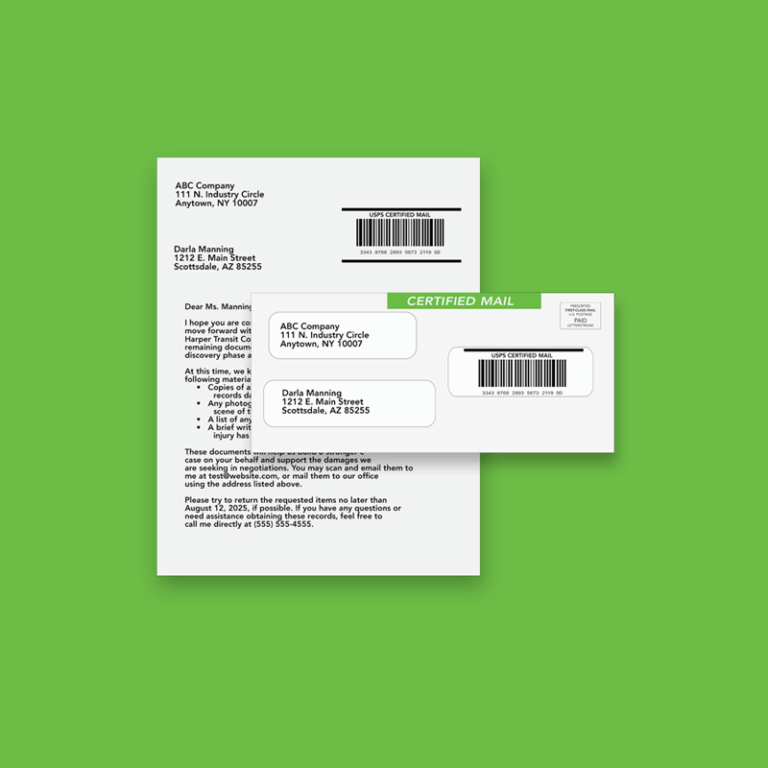
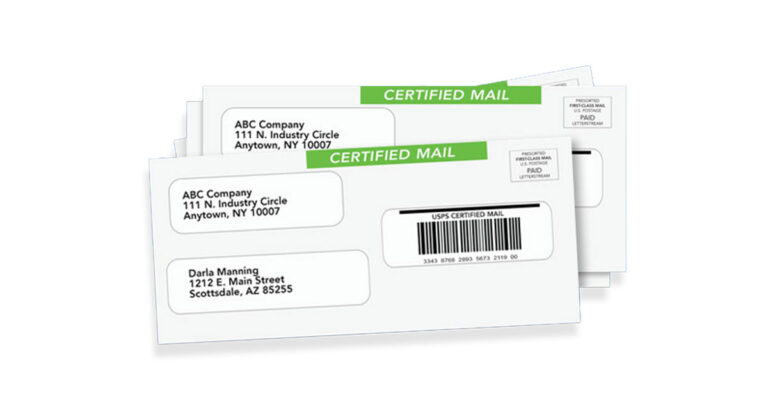
Tracking and audit trail capabilities provide proof of mailing through Certified Mail options, barcode tracking, piece counts per batch, confirmation of mail stream induction, and return mail handling. Online dashboards offer chain-of-custody visibility for regulatory audits, legal documentation, and internal compliance reporting.
Service Models
Fully outsourced models involve transmitting patient and billing data to a service provider who manages the entire workflow—print, postage, mailing, and tracking. This approach minimizes in-house overhead and enables faster implementation, though some organizations may feel they lose visibility or control over the process.
Hybrid approaches offer flexibility for organizations with specific requirements. Options include performing print operations in-house while outsourcing envelope stuffing and mailing, or using a vendor only for address validation and return mail handling while keeping design and formatting internal.
Integration with billing and EHR systems determines how efficiently the service operates within existing workflows. Many vendors offer APIs or secure file transfer protocols that pull statements directly from practice management systems. Advanced integrations can trigger statement runs automatically—for example, generating end-of-month balance statements without manual intervention. Compatibility with major EHRs like Epic, Cerner, and Athenahealth often serves as a key differentiator among providers.
Understanding these foundational elements makes sense before examining the specific benefits and cost savings these services deliver to healthcare organizations.

Patient Statement Printing and Mailing
Patient statement printing and mailing are essential components of effective patient communications and streamlined billing processes for healthcare organizations. By outsourcing patient statement printing to specialized, HIPAA-compliant companies, healthcare providers can ensure that sensitive patient information is handled securely and efficiently. Leveraging innovative solutions and advanced technology, these services automate statement printing, reduce labor costs, and minimize the risk of errors, allowing staff to focus on higher-value tasks and patient care.
A patient statement not only communicates charges and balances clearly but also enhances the patient financial experience by making it easier for patients to understand their bills and payment options. Integrating digital communications and online payment links directly into patient statements empowers patients to pay online, accelerating payments and improving cash flow for healthcare organizations.
Outsourcing patient statement printing also provides healthcare providers with scalable solutions that adapt to changing statement volumes without the need for additional investment in equipment or staff. By partnering with companies that specialize in HIPAA-compliant statement printing and delivery, healthcare organizations can streamline their billing processes, reduce administrative burdens, and ensure that every patient receives accurate, timely, and secure financial communications.
Best Practices for Patient Statement Mailing
Implementing best practices for patient statement mailing is crucial for healthcare providers aiming to improve patient satisfaction and streamline patient communications. Patient-friendly statements should use clear, straightforward language and a simple, organized layout that highlights key information such as payment options, due dates, and contact details. Prominently displaying these elements helps patients quickly understand what they owe, how to pay, and where to seek assistance, reducing confusion and the likelihood of missed payments.
To ensure compliance and security, all patient statements must be HIPAA-compliant and include essential details like the patient’s name, account number, and a clear breakdown of charges and payments. Incorporating educational content—such as explanations of insurance adjustments or links to financial resources—can further empower patients to make informed decisions about their care and financial responsibilities.
Healthcare organizations can reduce costs and administrative workload by outsourcing patient statement printing and mailing to reputable companies with expertise in secure, efficient delivery and innovative solutions. These providers offer advanced statement printing technology and best-in-class practices that help manage paperwork, track Certified Mail, and maintain compliance. By focusing on patient-friendly statements and leveraging outsourcing solutions, healthcare providers can efficiently manage patient communications, reduce billing-related costs, and deliver a better overall patient experience.

Benefits and Cost Analysis of Patient Statement Mailing Services
With the core components understood, the practical advantages of outsourcing statement mailing become clear across three categories: operational efficiency, cost reduction, and compliance assurance.
Operational Efficiency Gains
Elimination of manual administrative tasks frees significant staff time. Without automated services, employees must manage print jobs, stuff envelopes, apply postage, assemble mail trays, and track the mail—all tasks that consume hours weekly and create opportunities for error. A medical center case study documented 100% automation of their patient packet workflow, which eliminated manual auditing steps and reduced error risk substantially.
Staff time reallocation represents a hidden benefit many organizations underestimate. When employees no longer spend time on mailing operations, they can focus on patient calls, financial counseling, denial resolution, and other activities that directly improve cash flow and patient satisfaction. This shift transforms billing staff from processors into problem-solvers.
Reduced errors in patient billing communications come from systematic address hygiene and automated verification checkpoints. Address mismatches, returned mail, and mis-mailed sensitive content decrease significantly when CASS-Certified validation runs before every batch. Fewer errors mean fewer patient disputes, fewer complaints, and an improved patient financial experience overall.
Cost Reduction Opportunities
Direct cost savings become apparent when comparing manual and automated statement delivery. Outsourced print-and-mail services typically cost between $1 and $2.50 per statement, depending on volume, page count, and mailing requirements. In contrast, organizations that manage statement processing in-house often face much higher costs once labor, printing supplies, equipment maintenance, postage, error correction, reprints, and administrative overhead are taken into account. In many cases, the fully burdened cost of manual processing can exceed $5 per statement, making automation a more efficient and scalable solution.
Hidden cost elimination extends beyond obvious line items. Organizations save on printer maintenance, ink and paper storage space, envelope inventory management, and equipment replacement. They also avoid the indirect costs of returned mail handling, patient corrections, and potential litigation from mailing errors.
Scalability benefits matter particularly for growing practices and health systems. Internal infrastructure—aging printers, limited staff, finite storage—creates bottlenecks as statement volume increases. Outsourced services handle volume spikes with minimal incremental cost and no capital investment.
Faster sending improves cash flow by reducing days-to-payment. When patient statements get sent more quickly and reliably, patients pay faster. Fewer follow-up calls and second statements are needed, and the billing process moves more efficiently from charge capture to payment collection.
Compliance and Security Advantages
HIPAA compliance assurance shifts significant regulatory risk to Certified providers. Service vendors operating as Business Associates under signed BAAs must maintain administrative, technical, and physical safeguards for all PHI. This includes employee training, secure facility access, data encryption, and documented destruction procedures.
Confirmation and audit trail capabilities satisfy regulatory requirements that healthcare organizations face. Reports showing piece counts, delivery confirmations, returned mail statistics, and address update logs feed directly into risk assessments and compliance audits. For organizations dealing with collection notices or time-sensitive financial communications, proof of mailing can prove essential in disputes.
These tangible benefits connect directly to practical implementation considerations that determine how quickly organizations realize value from patient statement mailing services.

Implementation Process and Vendor Selection
Moving from understanding benefits to capturing them requires structured implementation. Most healthcare organizations complete the transition to a patient statement mailing service within 30 to 60 days, depending on complexity, volume, integration requirements, and stakeholder alignment but you can usually get started right away.
Implementation Timeline and Steps
- Data integration and system connectivity setup: Determine how your billing or EHR system will transmit data—file formats, frequency, secure transfer method (API or SFTP). Define variable data fields while minimizing unnecessary PHI exposure.
- Statement template design and compliance review: Create or refine statement templates including headers, itemizations, disclosures, and branding. Conduct legal and compliance review to ensure patient-friendly statements meet regulatory requirements for language, formatting, and PHI presentation.
- Address hygiene and validation configuration: Enable address validation services, batch cleansing protocols, and NCOA update schedules. Establish policies for handling undeliverable mail, return-to-sender situations, and data retention requirements.
- Testing phase with sample statement batches: Run pilot batches using test data to validate printing quality, envelope stuffing accuracy, address verification, content integrity, and audit trail functionality. Review tracking dashboards and exception handling procedures.
- Staff training on new workflows and monitoring tools: Train billing, claims, and compliance staff on initiating statement runs, interpreting reports, managing exceptions, and handling return mail. Establish vendor communication protocols and escalation paths.
- Go-live transition and ongoing support establishment: Begin full production while monitoring key metrics including mail volumes, returned statements, days to delivery, and patient payment patterns. Confirm vendor support availability and response time expectations.
Vendor Evaluation Criteria
Criterion | What to Evaluate |
HIPAA & Security Certifications | Signed BAA required; SOC 2 Type II, HITRUST, or ISO 27001 preferred—especially important for vendors serving the healthcare industry; encryption in transit and at rest; documented access controls |
Data Handling & PHI Workflow | Clear retention and destruction policies; returned mail procedures; comprehensive audit logs; secure print facility access oversight |
Integration Capabilities | Compatibility with your EHR/billing systems; supported file formats; API availability; automated statement triggers; NCOA integration; ability to quickly onboard new clients and integrate their data for seamless patient statement mailing service |
Pricing Model | Per-piece rates vs. flat monthly/volume tiers; setup fees; minimum volumes; return mail handling charges; reprinting and proofing costs. LetterStream charges for what you send only |
Tracking & Reporting | Proof of mailing documentation; tracking barcodes; real-time dashboards; piece-count reconciliation; delivery confirmation options |
Customer Support | Access to knowledgeable support resources, onboarding guidance, clear communication throughout implementation, and assistance with troubleshooting and ongoing account needs. |
Scalability | Volume spike handling; incremental pricing structure; reliability under increased load |
Synthesis for decision-making: Prioritize compliance and data handling first—a single breach or violation can cost far more than per-statement savings. For high-volume practices, weight integration and automation capabilities heavily since manual data transfers negate efficiency gains. Organizations with limited IT resources should prioritize vendors offering comprehensive onboarding support and proven EHR compatibility. |
Common Challenges and Solutions
Even well-planned implementations encounter obstacles. Understanding typical challenges helps healthcare organizations prepare effective responses.
When addressing data integration or staff resistance, it’s important to clearly communicate patient financial responsibility. Transparent billing statements and clear explanations of what the patient owes after insurance can improve collections and reduce confusion.
In the context of compliance documentation or workflow changes, enabling the person (patient) to make payments online or remotely is essential. This reduces the need for in-person transactions, increases convenience, and can streamline administrative processes.

Data Integration and System Compatibility Issues
Challenge: Organizations often rely on billing, accounting, or customer management systems that generate data differently. Inconsistent formatting, missing information, and data-entry errors can create processing delays, increase manual effort, and lead to inaccuracies in mailed communications.
Solution: Choose a provider with straightforward data requirements and a proven process for validating mailing data before production. Reviewing sample records, conducting test runs, and establishing clear data standards can help identify potential issues early and ensure accurate, reliable mail delivery.
Staff Resistance to Workflow Changes
Challenge: Employees may worry that automation threatens their positions or removes control over processes they’ve managed for years. Reluctance to change established routines can slow adoption and reduce the benefits organizations expect to capture.
Solution: Involve key stakeholders early in vendor selection and implementation planning. Present quantitative benefits—hours saved, errors eliminated, collections improved—that demonstrate value without threatening jobs. Emphasize that automation and outsourcing can save the organization money by reducing manual labor and improving cash flow. Redefine roles so staff transition from manual processing to oversight, exception handling, and patient communication. Pilot programs allow staff to see benefits before full rollout changes their daily work.
Compliance Documentation and Audit Preparation
Challenge: Maintaining complete and organized records can be difficult, especially when mailings involve sensitive information or regulatory requirements. Missing documentation, inconsistent recordkeeping, or limited visibility into mailing activity can make audits more time-consuming and increase compliance risk.
Solution: Establish clear documentation practices and work with providers that offer transparency into mailing activity. Maintaining accurate records, retaining mailing reports, and regularly reviewing processes can help support compliance efforts and simplify audit preparation when documentation is needed.
Conclusion and Next Steps
Patient statement mailing services help organizations streamline a traditionally time-consuming process by automating the production and delivery of billing statements. By reducing manual tasks, improving accuracy, supporting compliance efforts, and helping accelerate payment collection, these services allow staff to spend less time managing mail and more time focusing on higher-value responsibilities.
For organizations evaluating their options, the next step is to assess current statement workflows, identify operational bottlenecks, and compare providers based on reliability, security, reporting capabilities, ease of implementation, and overall service quality. Choosing the right solution can improve efficiency, enhance the patient experience, and support long-term operational goals.
Immediate next steps:
- Calculate your current cost-per-statement including labor, materials, postage, errors, and reprints
- Research vendors with proven integration capabilities for your specific EHR or billing system
- Review compliance certifications from your top three candidates
- Plan a pilot program with a subset of patient statements to validate quality and workflows
- Establish success metrics before go-live to measure improvements objectively
For clients seeking related operational improvements, consider exploring Certified Mail services for legally required notices, digital statement delivery options to reduce print volume, and integrated payment processing to simplify the medical billing experience.
Frequently Asked Questions
How much does patient statement mailing service typically cost per statement?
Automated print-and-mail services typically cost around $1 to $2.50 per statement, depending on factors such as volume, page count, and mailing requirements. While pricing varies by provider and service level, many organizations find that outsourcing statement delivery is more cost-effective than managing the process in-house, where labor, supplies, equipment maintenance, postage, error correction, and reprints can significantly increase the overall cost per statement.
What HIPAA compliance certifications should I look for in service providers?
At minimum, vendors must sign a Business Associate Agreement (BAA) and demonstrate administrative, technical, and physical safeguards for PHI. Look for SOC 2 Type II certification, HITRUST certification, or ISO 27001 compliance as indicators of mature security practices. Verify encryption standards for data in transit and at rest, along with documented access controls and employee training programs.
How long does implementation typically take for a mid-size medical practice?
At LetterStream you can start mailing right away. Overall most healthcare organizations complete implementation within 30 to 60 days from vendor selection to go-live. Timeline factors include integration complexity with existing billing systems, volume of statement types requiring template setup, compliance review processes, and staff training requirements. Organizations with well-documented data formats and clear template requirements often complete implementation faster.
Can patient statement mailing services integrate with Epic, Cerner, or other major EHR systems?
Yes, established vendors typically offer integration capabilities with major EHR and practice management systems including Epic, Cerner, Athenahealth, and others. Integration methods include API connections, secure file transfer (SFTP), and automated batch processing. During vendor evaluation, request specific documentation of successful integrations with your system and references from similar healthcare organizations.
What tracking and proof options are available for patient statements?
Services typically provide piece-count reconciliation, batch tracking, mail stream induction confirmation, and return mail reporting. Premium options include Intelligent Mail barcodes for individual piece tracking, Certified Mail with delivery confirmation, and detailed dashboards showing delivery status. These records serve as proof of mailing for compliance audits, legal documentation, and internal quality monitoring.
How do patient statement mailing services handle returned mail and address corrections?
Quality services implement or offer NCOA (National Change of Address) processing before mailing to identify patients who have moved—typically covering 48 months of USPS data. When mail returns as undeliverable, vendors capture return reasons, update address records, and provide reports to healthcare organizations. Some services offer address research options to locate updated patient addresses automatically.